Editorial Review
Author: PurePep Vital Research Editorial Team|Reviewed by: Scientific Compliance Reviewer
Last reviewed: February 2026
Cagrilintide: A Long-Acting Amylin Analog
Cagrilintide (formerly NN9838) is a long-acting analog of amylin. Amylin is a 37-amino-acid peptide hormone co-secreted with insulin from pancreatic beta cells after eating. While GLP-1 receptor agonists like semaglutide are the most well-known weight management peptides, cagrilintide takes a different approach. It targets the amylin receptor system (AMY1, AMY2, AMY3) in the brainstem.
Native amylin (also called IAPP) has a half-life of only 13 minutes. This limits its therapeutic use. Cagrilintide was engineered with strategic amino acid changes and a C18 fatty acid chain that enables albumin binding. This extends its half-life to about 160 hours — allowing once-weekly subcutaneous injection.
Cagrilintide activates amylin receptors in the hindbrain to reduce meal size, slow gastric emptying, and suppress post-meal glucagon release. The amylin pathway is anatomically distinct from the GLP-1 pathway, though both feed into appetite circuits in the hypothalamus.
This independence is why the combination (cagrilintide + semaglutide, marketed as CagriSema) produces weight loss well beyond either agent alone. For a complete overview of weight management peptides, see our peptide weight loss guide.
How Amylin Differs from GLP-1 in Satiety
Understanding cagrilintide requires understanding the amylin system it targets. This hormone pathway has been overshadowed by GLP-1 but plays an equally important role in metabolic control.
Amylin Secretion: Amylin is released from pancreatic beta cells in a 1:100 molar ratio with insulin. Every time food is eaten and insulin rises, amylin rises too.
In healthy individuals, amylin peaks about 15–30 minutes after a meal and returns to baseline within 2–3 hours. In type 2 diabetes and obesity, amylin secretion becomes disrupted — first excessive, then deficient as beta cell function declines.
Central Nervous System Effects: Amylin crosses the blood-brain barrier and binds to receptors in the area postrema (AP). AP amylin receptor activation sends signals through the nucleus tractus solitarius (NTS) and lateral parabrachial nucleus, reaching the hypothalamic feeding centers.
This pathway reduces meal size through satiation (within-meal fullness) rather than satiety (between-meal hunger). This sets it apart from GLP-1 signaling.
Gastric Motility: Amylin slows gastric emptying by 40–60% through vagal nerve signaling. This extends the time over which nutrients are absorbed, maintaining postprandial satiation. This gastric slowing adds to GLP-1-mediated gastric effects. It contributes to the enhanced effectiveness of combination approaches.
Glucagon Suppression: Amylin suppresses postprandial glucagon release from pancreatic alpha cells. This reduces hepatic glucose output. This effect complements insulin's glucose-lowering action and is especially relevant in type 2 diabetes research, where glucagon disruption drives much of the hyperglycemia. Learn more about peptide processes in our peptide science guide.
Phase II Weight Data: 15.8% at 68 Weeks
Cagrilintide has been tested in multiple clinical trials. Data supports its effectiveness both alone and combined with GLP-1 agonists.
Phase 2 Monotherapy Trial (2021): A 26-week randomized, double-blind, placebo-controlled trial in The Lancet enrolled 706 adults with overweight or obesity (BMI ≥30, or ≥27 with comorbidities) without diabetes.
Participants got weekly subcutaneous cagrilintide at 0.3, 0.6, 1.2, 2.4, or 4.5 mg, or placebo. At the highest dose (4.5 mg), mean body weight dropped 10.8% from baseline, versus 3.0% with placebo. The dose-response pattern was clear and consistent.
CagriSema Phase 2 Trial (2023): The combination of cagrilintide 2.4 mg + semaglutide 2.4 mg weekly was tested in 92 adults with obesity over 32 weeks. Mean body weight dropped 15.6%. This far exceeded the 5.1% with cagrilintide alone and 8.2% with semaglutide alone. This confirmed that amylin and GLP-1 pathway co-activation produces combined weight loss.
CagriSema Phase 3 (REDEFINE Program): The REDEFINE program includes multiple phase 3 trials with over 8,000 participants. It evaluates CagriSema for obesity and type 2 diabetes. Early data from REDEFINE-1 showed mean weight reductions of about 22–25% at 68 weeks — approaching bariatric surgery results without surgery. Full results are expected to support regulatory submission in 2026.
Metabolic Benefits: Beyond weight loss, cagrilintide trials show improvements in waist circumference (mean 9.1 cm reduction at 4.5 mg), HbA1c (0.3–0.4% drop in non-diabetic subjects), triglycerides, and blood pressure. These cardiometabolic gains suggest cagrilintide addresses metabolic syndrome broadly, not just body weight.
Free Peptide Calculator
Calculate precise reconstitution volumes and dosages with our peptide calculator tool.
CagriSema: Dual Amylin + Semaglutide Approach
Placing cagrilintide within the broader weight management peptide landscape shows its unique value and research potential.
Cagrilintide vs. Semaglutide: Semaglutide targets the GLP-1R pathway, mainly reducing appetite through hypothalamic GLP-1 receptor activation. Cagrilintide targets the amylin receptor system, reducing meal size through hindbrain satiation circuits.
As standalone treatments, semaglutide 2.4 mg produces about 12–15% weight loss at 68 weeks (STEP 1 trial). Cagrilintide 4.5 mg produces about 10.8% at 26 weeks. The combination (CagriSema) produces 22–25%, confirming these pathways complement rather than duplicate each other.
Cagrilintide vs. Tirzepatide: Tirzepatide is a dual GIP/GLP-1 receptor agonist that achieved up to 22.5% weight loss in the SURMOUNT-1 trial. Cagrilintide targets a completely different receptor system (amylin vs. incretin receptors). In theory, cagrilintide could be paired with tirzepatide for even greater results — addressing three distinct appetite pathways. This combination has not yet been studied clinically.
Cagrilintide vs. Pramlintide: Pramlintide (Symlin) is the only FDA-approved amylin analog. It requires injection 2–3 times daily due to its short half-life. Cagrilintide's once-weekly dosing is a major improvement in convenience and compliance.
Cagrilintide also achieves higher, more sustained amylin receptor activation and greater weight loss (10.8% vs. about 3–4%). See our complete weight loss peptide guide for comparisons across all categories.
Cagrilintide vs. AOD-9604: AOD-9604 is a growth hormone fragment that promotes lipolysis without GH-like effects on glucose or growth. It targets fat metabolism directly rather than appetite circuits. Cagrilintide works mainly through appetite reduction and gastric slowing. These distinct processes suggest potential complementarity, though combination research has not been published.
| Compound | Mechanism | Max Weight Loss | Dosing |
|---|---|---|---|
| Cagrilintide | Amylin analog | ~10.8% | Weekly SC |
| CagriSema | Amylin + GLP-1 | ~15.6% | Weekly SC |
| Semaglutide 2.4mg | GLP-1 agonist | ~14.9% | Weekly SC |
| Tirzepatide 15mg | GIP/GLP-1 dual | ~22.5% | Weekly SC |
Get Peptide Research Updates
New research, product launches, and exclusive offers. No spam.
Weekly vs Daily: Pharmacokinetic Advantages
Research protocols for cagrilintide follow dose escalation schedules from clinical trials — all for research reference only.
Standard Dose Escalation: Trials use a gradual titration to minimize GI side effects:
- Week 1–4: 0.25 mg weekly
- Week 5–8: 0.5 mg weekly
- Week 9–12: 1.0 mg weekly
- Week 13–16: 2.4 mg weekly
- Week 17+: 4.5 mg weekly (maximum studied dose)
Each dose level is held for 4 weeks before escalation. This allows receptor adaptation and reduces nausea — the most common dose-limiting side effect.
Administration: Cagrilintide is given as a once-weekly subcutaneous injection in the abdomen, thigh, or upper arm. The injection site should be rotated weekly. In trials, injections were given on the same day each week, at any time, regardless of meals. The 160-hour half-life provides consistent plasma levels throughout the dosing interval.
Combination Dosing (CagriSema): In CagriSema trials, both compounds are co-titrated. Cagrilintide escalates from 0.25 mg to 2.4 mg while semaglutide escalates from 0.25 mg to 2.4 mg, both weekly. The combination is given as a single injection using a co-formulation device. Use our peptide calculator for reconstitution volume calculations with research-grade material.
Duration: Weight management protocols typically span 52–68 weeks. Weight loss with cagrilintide follows a typical pattern: minimal loss in weeks 1–4 (titration), accelerating loss in weeks 4–26 (peak phase), and plateau at weeks 40–52 as a new metabolic set point is approached. Extended trials (>68 weeks) are testing weight maintenance durability.
Important Disclaimer
All products and information on this page are intended strictly for laboratory and scientific research use only. Not for human consumption. These statements have not been evaluated by the FDA.
GI Tolerability vs GLP-1 Monotherapy
Cagrilintide's safety profile has been mapped across multiple clinical trials with over 2,000 participants.
GI Effects: Nausea is the most common side effect, hitting 30–45% of participants at the 4.5 mg dose (vs. 6% with placebo). However, nausea is mainly mild-to-moderate.
It peaks during dose escalation and fades notably by week 8–12 of stable dosing. Vomiting occurs in 8–12% and diarrhea in 10–15%. The gradual titration protocol was designed to minimize these effects.
About 6% at the highest dose discontinued due to GI side effects.
Injection Site Reactions: Mild injection site reactions (redness, swelling, itching) occurred in 5–8% of participants. These generally resolved within 24–48 hours. No injection site infections were reported in pivotal trials.
Cardiovascular Safety: No cardiovascular safety signals have been found. Heart rate increases of 1–3 bpm were seen (similar to other incretin-based therapies). No notable arrhythmias or cardiovascular events were tied to cagrilintide. The ongoing REDEFINE cardiovascular outcomes trial will provide definitive safety data.
Pancreatitis Monitoring: As with all incretin and amylin-based therapies, pancreatitis is a watched event. In cagrilintide trials, pancreatitis rates were no different from placebo (0.1% vs. 0.1%). Lipase and amylase elevations occurred in 7–10% of participants but were not linked to clinical pancreatitis.
Lean Mass Preservation: A concern with rapid weight loss is lean mass loss. In cagrilintide trials, about 60–65% of weight lost was fat mass, with 35–40% lean mass. This is consistent with pharmacological weight loss interventions overall.
Resistance exercise and adequate protein intake (≥1.2 g/kg) during treatment may improve the fat-to-lean mass loss ratio. Learn more in our muscle growth guide.
Novo Nordisk Pipeline: Approval Timeline
The combination of cagrilintide (amylin analog) and semaglutide (GLP-1 agonist) marks a major shift in metabolic peptide research. It is the first clinically validated dual-pathway approach to appetite control.
Neuroanatomical Complementarity: GLP-1 receptors concentrate in the hypothalamic arcuate and paraventricular nuclei. They reduce appetite through melanocortin pathway activation. Amylin receptors concentrate in the area postrema and nucleus tractus solitarius, driving satiation through hindbrain circuits. These pathways converge but are not redundant. Activating both produces additive or combined appetite suppression.
Temporal Complementarity: GLP-1 signaling mainly reduces between-meal hunger (satiety). Amylin signaling mainly reduces within-meal food intake (satiation). The combination addresses both dimensions. Subjects eat less at each meal and feel less hungry between meals. This dual coverage explains why CagriSema weight loss exceeds the sum of its parts.
Metabolic Complementarity: Semaglutide improves insulin sensitivity and beta cell function through GLP-1R pathways. Cagrilintide suppresses glucagon and slows gastric emptying through amylin pathways. Together, they provide more complete metabolic control than either alone. This is especially relevant for individuals with both obesity and type 2 diabetes.
Research Implications: The success of this combination has spurred research into other multi-pathway approaches. Triple combinations targeting amylin + GLP-1 + GIP receptors are in preclinical development.
The key idea — that obesity is a multi-pathway disease needing multi-pathway treatment — represents a basic shift in metabolic research thinking. For context on other metabolic peptides, explore our Lipo-C peptide guide.
Amylin Research Beyond Obesity
Cagrilintide research is evolving fast, with several developments set to expand its utility.
Regulatory Timeline: Novo Nordisk has submitted CagriSema for FDA review. A decision is expected in late 2026. If approved, CagriSema would be the first combination amylin-GLP-1 therapy for obesity. European Medicines Agency submission is expected to follow the FDA decision by about 6 months.
Oral Formulations: Current cagrilintide requires injection. Oral amylin analog formulations are in early development. The success of oral semaglutide (Rybelsus) proved that peptide oral bioavailability is achievable with the right absorption enhancers. Oral cagrilintide would greatly improve convenience and compliance.
Expanded Indications: Beyond obesity, cagrilintide is being studied for NASH (non-alcoholic steatohepatitis). Its combination of weight reduction and metabolic improvement addresses multiple disease drivers. Additional research is exploring cagrilintide in heart failure with preserved ejection fraction (HFpEF), where obesity-related hemodynamic burden is a key factor.
Personalized Combination Therapy: Research is moving toward personalized peptide combinations based on individual metabolic profiling. Subjects with high amylin levels but low GLP-1 sensitivity may benefit more from GLP-1-targeted therapy. Those with amylin deficiency may respond better to cagrilintide. Biomarker-guided treatment selection could optimize outcomes and limit unnecessary exposure.
Cagrilintide highlights a broader theme in metabolic peptide research. The most effective interventions often target the endogenous hormonal systems that obesity has disrupted. They restore natural appetite control rather than imposing pharmacological appetite suppression. Research listings link to retailers—verify COAs with sellers; about explains our hub role (we don’t verify compounds).
Important Disclaimer — For Research Use Only
The information provided is for educational and research purposes only. All peptides discussed or linked on this site are intended strictly for laboratory and scientific research use only (RUO) and are not for human consumption, injection, ingestion, or any therapeutic application. These products have not been evaluated or approved by the FDA or any regulatory body and are not intended to diagnose, treat, cure, or prevent any disease or condition. Reliance on this content is at your own risk. Consult qualified professionals for any health-related decisions. PurePep Vital disclaims all liability for misuse. Products are offered by third-party retailers for research use only.
PurePep Vital is an editorial publisher, vendor comparison resource, and affiliate deal tracker. We do not manufacture, compound, sell, ship, test, prescribe, or handle peptide products. Purchases are completed directly through third-party retailers. PurePep Vital is not a compounding pharmacy or chemical compounding facility as defined under 503A of the Federal Food, Drug, and Cosmetic Act. PurePep Vital is not an outsourcing facility as defined under 503B of the Federal Food, Drug, and Cosmetic Act.
Disclosure: This page contains affiliate links. We may earn from qualifying purchases. See our full disclosure.
Need deals after the research?
Use the deals hub to compare current offers, partner codes, and research news. We recommend retailers that provide quality signals when available.
Explore Our Guides
Related Articles

Lipo C Peptide: A Research Guide to Enhanced Fat Metabolism
Lipo C peptide combines lipotropic compounds with essential nutrients to support the body's fat metabolism pathways. Here is the science behind the formula.

Bioactive Precision Peptides: Targeted Compounds for Specific Results
Bioactive precision peptides represent the cutting edge of targeted biological intervention. Here is how they differ from generic peptide products.
SARMs vs. Peptides: A Comprehensive Comparison Guide
SARMs and peptides are both popular performance-enhancing compounds, but they work through fundamentally different mechanisms. Here is how they compare.
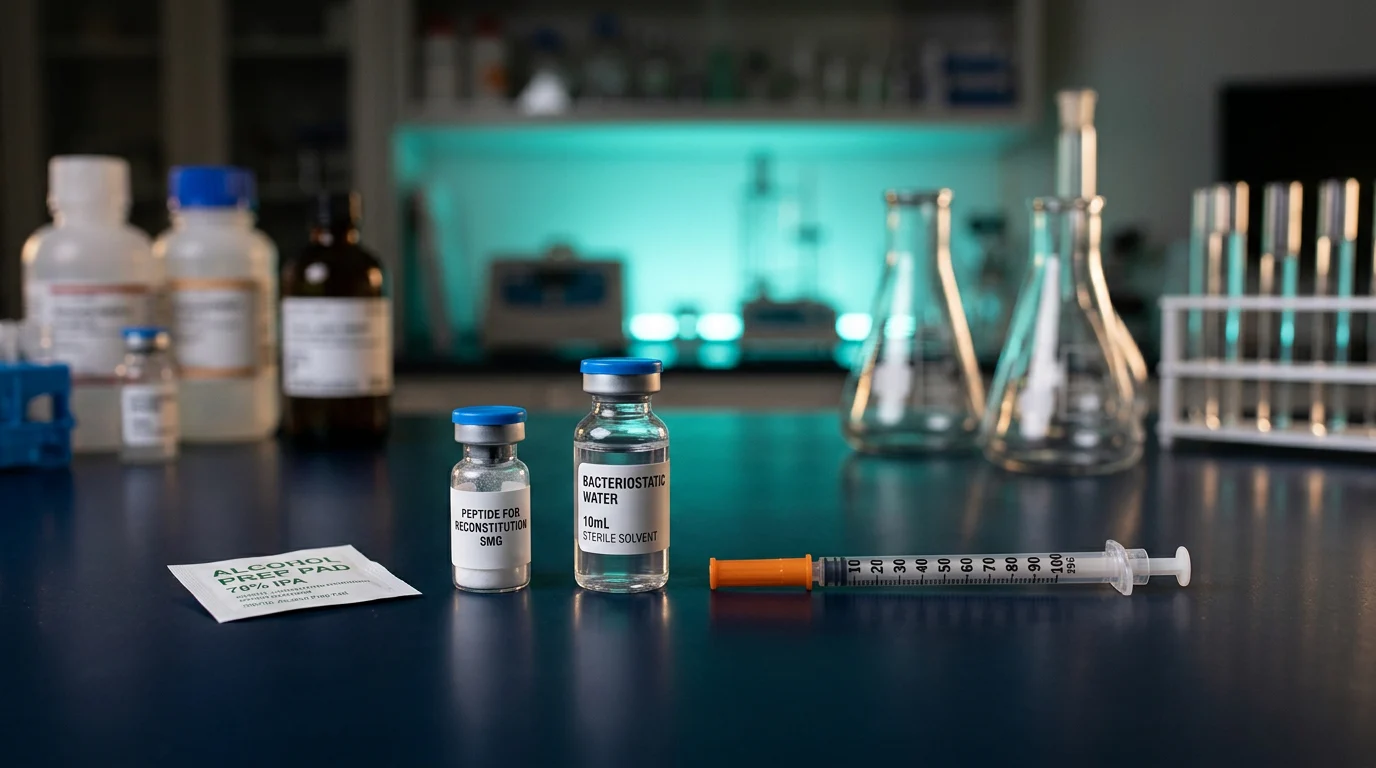
How to Reconstitute Peptides: Step-by-Step Guide
Proper reconstitution is critical for peptide efficacy and safety. Here is a complete step-by-step guide with calculation examples.
Frequently Asked Questions
Cagrilintide is a long-acting synthetic analog of amylin, a peptide hormone co-secreted with insulin from pancreatic beta cells. It activates amylin receptors (AMY1, AMY2, AMY3) in the brainstem area postrema and nucleus tractus solitarius, reducing meal size through satiation signaling, slowing gastric emptying by 40–60%, and suppressing postprandial glucagon secretion. Its 160-hour half-life enables once-weekly subcutaneous dosing.