Editorial Review
Author: PurePep Vital Research Editorial Team|Reviewed by: Scientific Compliance Reviewer
Last reviewed: February 2026
Why Proper Reconstitution Matters
Peptides are typically sold as lyophilized (freeze-dried) powder. They degrade quickly in liquid form at room temperature. Lyophilization removes water while preserving the peptide's structure and biological activity. Properly stored at -20°C, they stay stable for 12-24 months.
Before use, this powder must be reconstituted — dissolved in a sterile solvent. The process must follow specific protocols that preserve the peptide's molecular structure. For BAC water details, read our bacteriostatic water guide.
Getting it wrong creates several problems:
- Denaturation: Aggressive mixing can break peptide bonds and disrupt structure. This renders the compound inactive. Shaking creates foam. The air-liquid interfaces in those bubbles denature peptide molecules irreversibly
- Contamination: Non-sterile technique introduces bacteria that can cause infections. Even a single touch to the vial septum without prior alcohol cleaning can introduce pathogens
- Inaccurate dosing: Wrong solvent volumes lead to wrong concentrations and unpredictable results. A calculation error that doubles the concentration means every dose delivers twice the intended amount
- Rapid breakdown: Improper storage after reconstitution shortens the usable life of the peptide. A reconstituted peptide left at room temperature may lose 50%+ of its potency within 48-72 hours. Properly refrigerated in BAC water, it lasts 4-6 weeks
The good news: reconstitution is straightforward when done correctly. Before adding BAC water, use the peptide reconstitution calculator to compute final concentration (mcg/mL) for the vial mass and chosen volume. After reconstitution, see how to store peptides (lyophilized and liquid).
Whether working with BPC-157 and TB-500, KPV, or any other research peptide, the basic reconstitution process is the same. Here is exactly how to do it.
Required Materials
Gather all supplies before beginning. Having everything prepared prevents interruptions that could compromise sterility:
- Lyophilized peptide vial — the peptide in powder form. The powder may appear as a white to off-white cake or crystalline substance. Note the peptide amount in milligrams (mg) on the label
- Bacteriostatic water (BAC water): Sterile water with 0.9% benzyl alcohol as a preservative. This is the standard solvent for most peptides. The benzyl alcohol prevents bacterial growth, extending shelf life from hours to weeks. Do not use plain sterile water unless the peptide specifically requires it. Without preservative, the solution must be used at once or discarded. Do not use saline unless specified by the manufacturer
- Alcohol swabs: 70% isopropyl alcohol swabs for sterilizing vial tops before needle insertion. Pre-packaged, individually sealed swabs ensure sterility
- Syringes: Insulin syringes (1mL/100 unit) are standard. Their fine graduations allow precise volume measurement. Use one syringe for drawing BAC water into the peptide vial. For separate drawing and dosing, use a fresh syringe each time
- Clean workspace: A sanitized, flat surface free from contaminants. Wipe down with 70% isopropyl alcohol before starting. Work in a low-traffic area away from open windows, fans, or air vents
Quality starts with quality supplies. Using expired BAC water, contaminated swabs, or reused syringes undermines the entire reconstitution process. Browse research listings for compounds—follow each retailer’s documentation; PurePep does not ship products.
Syringes and Supplies for Peptide Research
Proper syringe and supply selection directly impacts dosing accuracy and sterile technique. These guidelines align with protocols used in clinical trials and preclinical studies.
Insulin Syringe Gauges for Subcutaneous Use
Research protocols typically specify insulin syringes with 29g, 30g, or 31g needles. These fine-gauge needles minimize tissue trauma while delivering consistent subcutaneous depth. The 29g offers slightly faster withdrawal from vials. The 30g and 31g provide finer penetration with minimal sensation. All three gauges work for subcutaneous delivery.
Syringe Selection Based on Volume
Peptide dose volumes typically range from 0.05 mL (5 units) to 0.5 mL (50 units). A 0.5 mL (50-unit) syringe with half-unit markings provides the best precision for most protocols. For doses under 0.1 mL, a 0.3 mL (30-unit) syringe improves accuracy.
Volumes over 0.5 mL may need a 1.0 mL (100-unit) syringe or splitting the dose across two sites. Match syringe capacity to the target volume for readable graduations and less dosing error.
Sterile Technique: Alcohol Swabs and Vial Adapters
Use 70% isopropyl alcohol swabs to disinfect vial stoppers before every needle insertion. Administration sites are also swabbed before each use in standard protocols. Allow alcohol to dry fully (15-30 seconds) before puncturing. Wet alcohol can introduce irritants.
Vial adapters reduce repeated stopper punctures. They may extend vial integrity in multi-dose protocols. Swab the adapter port with alcohol before each access. Always use single-use, individually packaged supplies. Never reuse swabs, syringes, or adapters between vials.
Free Peptide Calculator
Calculate precise reconstitution volumes and dosages with our peptide calculator tool.
Step-by-Step Reconstitution Protocol
- Allow both vials to reach room temperature. Remove the peptide vial from freezer storage and the BAC water from the refrigerator. Allow 15-30 minutes for temperature equilibration. Do not reconstitute cold peptides — temperature differentials cause condensation that can introduce moisture and contaminants, and cold solvent dissolves peptides more slowly, tempting users to shake the vial
- Wash hands thoroughly with antibacterial soap and dry with a clean, lint-free towel. Consider using nitrile gloves if available — they provide an additional sterility barrier
- Swab the tops of both the peptide vial and the BAC water vial with alcohol swabs. Press firmly and wipe in one direction across the entire rubber septum. Allow to dry completely (about 30 seconds) — inserting a needle through wet alcohol can introduce alcohol into the solution
- Draw the desired volume of BAC water into the syringe. Use our peptide calculator to determine the correct volume for the desired concentration. Common volumes are 1mL or 2mL for most research peptides. Draw slightly more than needed, then push the excess back to eliminate air bubbles
- Insert the needle into the peptide vial at a slight angle, directing the needle tip toward the glass wall of the vial — not directly onto the powder cake. Puncture the septum cleanly with steady pressure; do not twist or wobble the needle
- Slowly depress the plunger, allowing the BAC water to run down the inside wall of the vial. This is critical: NEVER spray directly onto the peptide cake. The mechanical force of a direct stream can shear peptide bonds and denature the molecule. Let gravity and capillary action carry the water to the powder. Aim for 30-60 seconds to fully depress the plunger
- Once all BAC water is added, withdraw the needle and gently swirl the vial in slow circular motions, tilting slightly to allow liquid to wash over any remaining powder. DO NOT shake, vortex, or agitate aggressively. The peptide should dissolve within 1-3 minutes of gentle swirling. If small particles remain, place the vial in the refrigerator and check after 30 minutes — most peptides will fully dissolve with time and gentle cold motion
- Inspect the solution. A properly reconstituted peptide solution should be clear and colorless. Slight opalescence is acceptable for some peptides. Cloudiness, visible particles after 30+ minutes, or discoloration indicates degradation — do not use a compromised solution
- Label the vial with the peptide name, concentration (mcg per unit on insulin syringe), reconstitution date, and calculated expiration date (typically 4-6 weeks from reconstitution)
- Store immediately in the refrigerator at 2-8°C (36-46°F). Most reconstituted peptides remain stable for 4-6 weeks when stored properly in BAC water. Store upright, away from the refrigerator light, and in a consistent-temperature zone (not in the door)
Get Peptide Research Updates
New research, product launches, and exclusive offers. No spam.
Reconstitution Calculations
Understanding concentration calculations ensures accurate dosing. The math is simple once the relationship between peptide amount, solvent volume, and concentration is clear:
Formula: Peptide amount (mg) ÷ BAC water volume (mL) = Concentration (mg/mL)
Example 1 — BPC-157: Given a 5mg vial of BPC-157 with 2mL of BAC water added:
5mg ÷ 2mL = 2.5mg/mL (or 2,500mcg/mL)
For a 250mcg dose: 250 ÷ 2,500 = 0.1mL (10 units on an insulin syringe)
This yields 20 doses per vial (5,000mcg ÷ 250mcg = 20)
Example 2 — TB-500: Given a 10mg vial of TB-500 with 2mL of BAC water added:
10mg ÷ 2mL = 5mg/mL (or 5,000mcg/mL)
For a 2.5mg dose: 2,500 ÷ 5,000 = 0.5mL (50 units on an insulin syringe)
This yields 4 doses per vial (10,000mcg ÷ 2,500mcg = 4)
Example 3 — KPV: Given a 5mg vial of KPV with 2.5mL of BAC water added:
5mg ÷ 2.5mL = 2mg/mL (or 2,000mcg/mL)
For a 500mcg dose: 500 ÷ 2,000 = 0.25mL (25 units on an insulin syringe)
This yields 10 doses per vial (5,000mcg ÷ 500mcg = 10)
For instant calculations without the math, use our free peptide reconstitution calculator. It handles any peptide amount, any BAC water volume, and any desired dose — outputting the exact syringe units for the insulin syringe.
Important Disclaimer
All products and information on this page are intended strictly for laboratory and scientific research use only. Not for human consumption. These statements have not been evaluated by the FDA.
Choosing the Right Solvent
Not all solvents are interchangeable. Choosing the wrong one can degrade the peptide or create safety issues:
Bacteriostatic Water (BAC Water) — Standard Choice
Sterile water with 0.9% benzyl alcohol. Suitable for the vast majority of research peptides. The benzyl alcohol prevents microbial growth, allowing multi-dose use from a single vial over 4-6 weeks. This is the default choice unless the peptide specifically requires something else.
Sterile Water for Injection (SWFI)
Pure sterile water without preservatives. Required for single-dose use only — without benzyl alcohol, bacterial growth can begin within hours. Used for peptides that are incompatible with benzyl alcohol (rare) or for immediate single-use preparations.
Acetic Acid Solution (0.6%)
Some peptides with poor solubility at neutral pH need mild acid to dissolve. Peptides with high isoelectric points or hydrophobic sequences may not dissolve in BAC water alone. If the documentation specifies acetic acid, use 0.6% solution and follow the manufacturer's instructions.
Sodium Chloride (0.9% Saline)
Isotonic saline is sometimes specified for certain peptide preparations, mainly those intended for intravenous research. It provides osmotic compatibility but lacks the preservative properties of BAC water.
When in doubt, BAC water is the safest default. Check the manufacturer's documentation for specific solvent recommendations. The wrong solvent can cause incomplete dissolution, peptide breakdown, or pH issues that affect biological activity. Our peptide basics guide covers more considerations for working with peptides.
Storage After Reconstitution
Proper storage after reconstitution is just as important as the reconstitution process itself. Peptides in solution are far more vulnerable to degradation than lyophilized powder:
Temperature
Store reconstituted peptides at 2-8°C (36-46°F) — standard refrigerator temperature. Do not store in the refrigerator door (temperature fluctuates with opening/closing). Place the vial in a consistent-temperature zone, ideally in a small container or bag to prevent accidental tipping.
Light Protection
Many peptides are photosensitive — UV and visible light can trigger photolytic degradation. Store vials in their original box or wrap in aluminum foil if they will be exposed to light. Never leave reconstituted peptides on a countertop or windowsill.
Duration
Reconstituted peptides in BAC water: 4-6 weeks at 2-8°C. More stable peptides (like collagen) may last longer. More fragile ones (like some growth hormone secretagogues) may begin degrading after 3-4 weeks. If cloudiness, particles, or color change appears at any point, discard the solution.
Unreconstituted Storage
Lyophilized (unreconstituted) peptides should be stored at -20°C (standard freezer) for long-term storage. Most peptides stay stable for 12-24 months at this temperature. Some can be refrigerated (2-8°C) for shorter periods (1-3 months). Room temperature storage is generally not recommended for more than a few days.
Critical Rule: Never Freeze Reconstituted Peptides
Freeze-thaw cycles create ice crystals that damage peptide structure and can cause irreversible clumping. Once reconstituted, keep the peptide refrigerated — never frozen. If more peptide is available than can be used within the storage window, reconstitute only what is needed. Keep the remainder as lyophilized powder in the freezer.
Common Mistakes to Avoid
- Shaking the vial: This denatures peptides by creating air-liquid interfaces where peptide molecules unfold and aggregate. Always swirl gently. If foam appears, the agitation has been too aggressive — foam formation indicates protein denaturation is occurring
- Spraying BAC water directly onto the powder: This damages the peptide structure through mechanical shear forces. Always direct the stream down the vial wall and allow it to flow to the powder gently
- Using non-sterile technique: Always swab vial tops with alcohol and use new, individually packaged syringes for each reconstitution. Reusing syringes introduces contamination, even if they "look clean"
- Freezing reconstituted peptides: Freeze-thaw cycles destroy peptides through ice crystal formation. Only store at refrigerator temperature (2-8°C). Lyophilized (unreconstituted) peptides CAN be stored in the freezer — this distinction is critical
- Using expired BAC water: Check expiration dates. BAC water's benzyl alcohol preservative degrades over time, and once a BAC water vial is opened, bacterial contamination can occur. Use BAC water within 28 days of first puncture
- Incorrect calculations: Double-check the math or use a calculator. A 10x dosing error can produce dramatically different results. Write down all calculations and verify before drawing the dose
- Using the wrong syringe: Standard 3mL syringes have coarse graduations unsuitable for peptide dosing precision. Use insulin syringes (1mL/100 unit) for all peptide measurements — they allow precision to ±1 unit (0.01mL)
- Reconstituting too much: Only reconstitute what can reasonably be used within 4-6 weeks. Reconstituted peptide degrades steadily — the last doses from a vial reconstituted 8 weeks ago will have significantly reduced potency compared to the first doses
Quality depends on vendor documentation. Browse research listings and request batch COAs from retailers. PurePep Vital does not manufacture peptides or run lab tests—see our about page for what we do and do not verify.
Advanced Tips for Experienced Users
Once basic reconstitution is mastered, these tips can optimize the workflow:
Choosing the BAC Water Volume Strategically
Pick a BAC water volume that creates convenient syringe measurements for the target dose. For example, for 300mcg doses from a 5mg vial, adding 1.67mL means each 10 units equals 300mcg. The peptide calculator can help find the best volume for clean dosing increments.
Multi-Vial Reconstitution
If reconstituting multiple vials in one session, process them one at a time. Use a fresh syringe and alcohol swab for each vial. Label each vial right after reconstitution — unlabeled vials are a safety hazard.
Travel Considerations
Reconstituted peptides require continuous refrigeration. For transport, use an insulated bag with ice packs that maintain 2-8°C. Do not place vials directly on ice (too cold). For air travel, check applicable regulations regarding transporting research materials.
Assessing Peptide Integrity
After reconstitution, a quality solution should be water-clear, colorless, and free of particles. Cloudiness right after reconstitution may mean the peptide degraded during storage or transit. Cloudiness that develops later also signals degradation — discard and use a fresh vial. A pH strip can verify the solution is in the expected range (typically pH 5-7).
Proper reconstitution is basic to all peptide research. Whether working with recovery peptides like the Wolverine stack, anti-inflammatory compounds like KPV, or any other research peptide, the principles stay the same. For a complete overview of peptide science, visit our peptide basics guide.
Important Disclaimer — For Research Use Only
The information provided is for educational and research purposes only. All peptides discussed or linked on this site are intended strictly for laboratory and scientific research use only (RUO) and are not for human consumption, injection, ingestion, or any therapeutic application. These products have not been evaluated or approved by the FDA or any regulatory body and are not intended to diagnose, treat, cure, or prevent any disease or condition. Reliance on this content is at your own risk. Consult qualified professionals for any health-related decisions. PurePep Vital disclaims all liability for misuse. Products are offered by third-party retailers for research use only.
PurePep Vital is an editorial publisher, vendor comparison resource, and affiliate deal tracker. We do not manufacture, compound, sell, ship, test, prescribe, or handle peptide products. Purchases are completed directly through third-party retailers. PurePep Vital is not a compounding pharmacy or chemical compounding facility as defined under 503A of the Federal Food, Drug, and Cosmetic Act. PurePep Vital is not an outsourcing facility as defined under 503B of the Federal Food, Drug, and Cosmetic Act.
Disclosure: This page contains affiliate links. We may earn from qualifying purchases. See our full disclosure.
Need deals after the research?
Use the deals hub to compare current offers, partner codes, and research news. We recommend retailers that provide quality signals when available.
Explore Our Guides
Related Articles
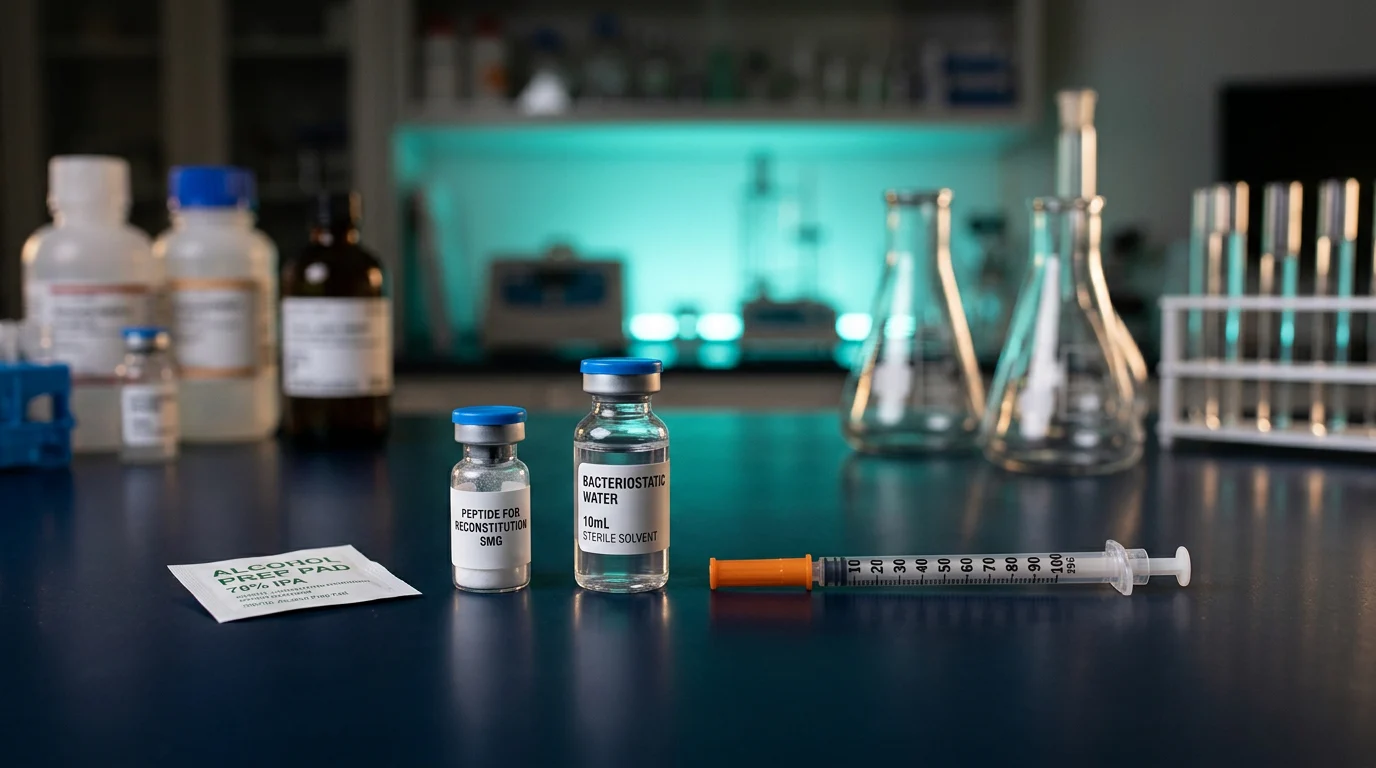
Bacteriostatic Water for Peptides: The Complete Research Guide
Bacteriostatic water is the standard reconstitution solvent for lyophilized peptides in research settings. This guide covers BAC water composition, reconstitution technique, storage protocols, and how it compares to sterile water and acetic acid solutions.

Wolverine Stack Peptide: The Ultimate Recovery Protocol
The Wolverine stack combines BPC-157 and TB-500 for accelerated healing and recovery. Here is what the research says about this popular peptide combination.
Are Peptides Legal? A Clear Guide to Peptide Regulations
The legal status of peptides varies by type, jurisdiction, and intended use. Here is a clear breakdown of what is and is not permitted.

KPV Peptide Benefits: Anti-Inflammatory Powerhouse Explained
KPV peptide is a potent anti-inflammatory derived from alpha-MSH. Here is what the research shows about its benefits for gut health, skin, and immune function.
Frequently Asked Questions
Bacteriostatic water (BAC water) is the standard reconstitution solvent for most peptides. It contains 0.9% benzyl alcohol as a preservative, which prevents bacterial growth and extends the shelf life of reconstituted peptides to 4-6 weeks when refrigerated. Some peptides may require sterile water, 0.6% acetic acid, or saline — check the manufacturer's documentation.