Editorial Review
Author: PurePep Vital Research Editorial Team|Reviewed by: Scientific Compliance Reviewer
Last reviewed: March 2026
Short answer
Lyophilized (powder): Store sealed, cold, dark—typically −20 °C for long term; many suppliers cite 12–24 months stability sealed. Reconstituted: Usually 2–8 °C, protected from light; typical windows are weeks with bacteriostatic water—confirm per compound and COA. Do not freeze most reconstituted solutions. Always follow supplier documentation.
Lyophilized peptides
Water activity near zero slows degradation. Keep vials sealed until use. Minimize temperature swings and light. Repeated room-temperature exposure shortens life. For how to dissolve, see how to reconstitute peptides and peptide calculator for concentration math.
After reconstitution
Liquid phase is less stable. Refrigerate promptly. Label vial with date and concentration. Avoid freeze-thaw of finished solution unless your protocol explicitly allows it—ice crystals and shear stress damage peptides. See peptide bond for why chain integrity matters.
Free Peptide Calculator
Calculate precise reconstitution volumes and dosages with our peptide calculator tool.
Do peptides need to be refrigerated?
Powder: Freezer is standard for long storage. Liquid: Yes, typically 2–8 °C for short-term use. Unreconstituted sealed vials may ship cold; read retailer guidance.
Get Peptide Research Updates
New research, product launches, and exclusive offers. No spam.
Temperature stability by peptide type
Stability varies by sequence, modification, and formulation. General guidelines from published literature:
| Form | Temperature | Typical Stability |
|---|---|---|
| Lyophilized, sealed | −20 °C | 12–24+ months |
| Lyophilized, sealed | 2–8 °C | 6–12 months |
| Reconstituted (BAC water) | 2–8 °C | 4–6 weeks |
| Reconstituted (sterile water) | 2–8 °C | 24–48 hours |
Always defer to supplier documentation for batch-specific data.
Important Disclaimer
All products and information on this page are intended strictly for laboratory and scientific research use only. Not for human consumption. These statements have not been evaluated by the FDA.
Common storage mistakes in research settings
Freeze-thaw cycling: Repeatedly freezing and thawing reconstituted peptides causes aggregation and denaturation. Aliquot if multiple uses are planned.
Light exposure: UV and visible light degrade many peptide bonds. Amber vials or foil wrapping is standard practice in research protocols.
Contamination: Using non-sterile needles or touching the septum introduces bacteria. See bacteriostatic water guide for proper aseptic technique.
Room temperature shipping delays: Extended transit at ambient temperature can compromise lyophilized peptides. Request cold-pack shipping from retailers when available.
Shipping and cold chain considerations
Most reputable research peptide retailers ship lyophilized vials with cold packs or dry ice for orders above certain thresholds. Reconstituted peptides should generally not be shipped—prepare solutions on-site from lyophilized powder.
For international orders, customs delays can expose vials to temperature excursions. Document arrival temperatures when possible and inspect vials for signs of degradation (discoloration, clumping). Contact the retailer about replacement policies for temperature-compromised shipments. See current deals for retailers with documented cold-chain practices.
Sterile vials and accessories (research handling)
Laboratories sometimes purchase empty sterile vials (for example clear glass with septa) for aliquoting, dilution, or compatibility checks separate from the primary peptide lot. Any accessory must match the closure size, needle gauge, and sterility expectations in the lab SOP. Empty vials do not improve peptide quality by themselves—they only matter when preparation workflow requires additional containers.
Organizers and cases sized for small vials (including 3 mL formats) are logistics tools; they do not replace temperature control or light protection. Pair vial choice with bacteriostatic water and reconstitution technique documentation.
Important Disclaimer — For Research Use Only
The information provided is for educational and research purposes only. All peptides discussed or linked on this site are intended strictly for laboratory and scientific research use only (RUO) and are not for human consumption, injection, ingestion, or any therapeutic application. These products have not been evaluated or approved by the FDA or any regulatory body and are not intended to diagnose, treat, cure, or prevent any disease or condition. Reliance on this content is at your own risk. Consult qualified professionals for any health-related decisions. PurePep Vital disclaims all liability for misuse. Products are offered by third-party retailers for research use only.
PurePep Vital is an editorial publisher, vendor comparison resource, and affiliate deal tracker. We do not manufacture, compound, sell, ship, test, prescribe, or handle peptide products. Purchases are completed directly through third-party retailers. PurePep Vital is not a compounding pharmacy or chemical compounding facility as defined under 503A of the Federal Food, Drug, and Cosmetic Act. PurePep Vital is not an outsourcing facility as defined under 503B of the Federal Food, Drug, and Cosmetic Act.
Disclosure: This page contains affiliate links. We may earn from qualifying purchases. See our full disclosure.
Need deals after the research?
Use the deals hub to compare current offers, partner codes, and research news. We recommend retailers that provide quality signals when available.
Explore Our Guides
Related Articles
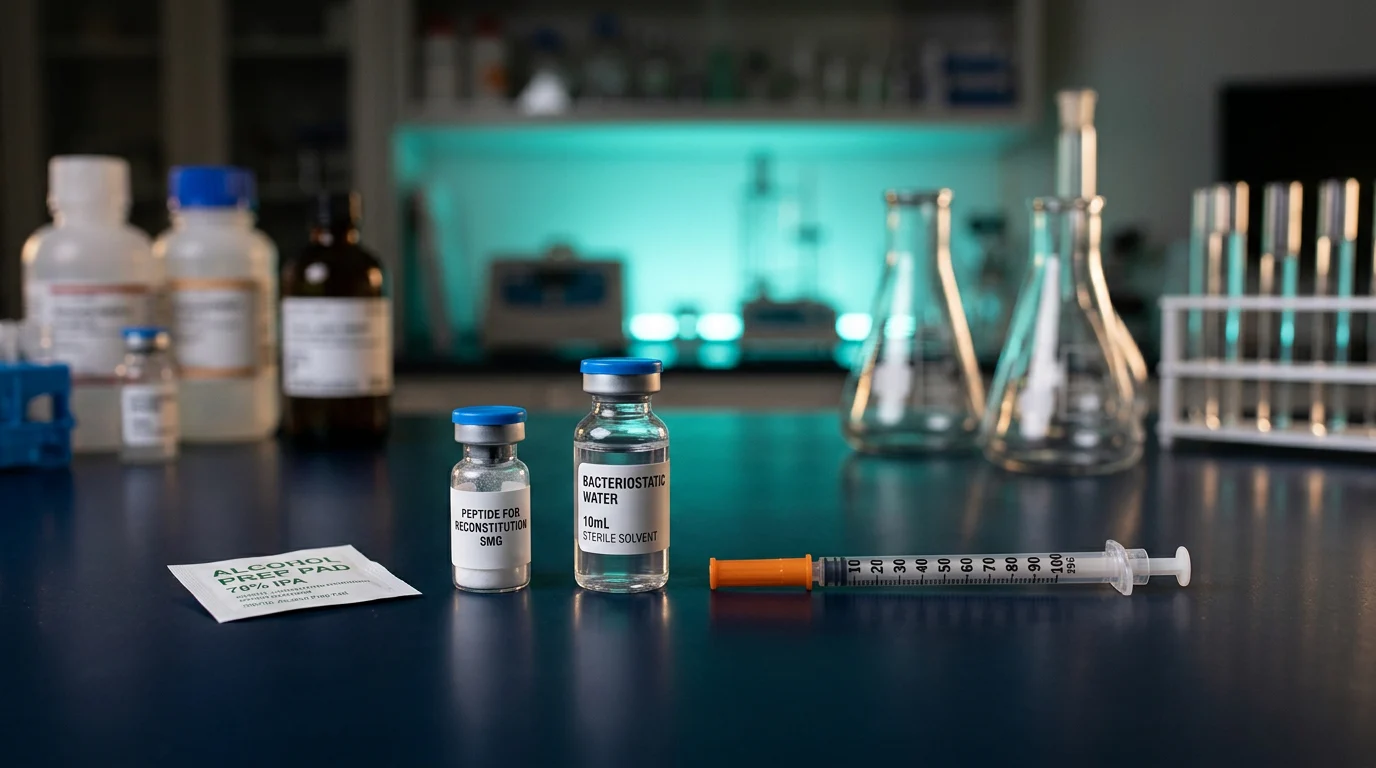
How to Reconstitute Peptides: Step-by-Step Guide
Proper reconstitution is critical for peptide efficacy and safety. Here is a complete step-by-step guide with calculation examples.
Bacteriostatic Water for Peptides: The Complete Research Guide
Bacteriostatic water is the standard reconstitution solvent for lyophilized peptides in research settings. This guide covers BAC water composition, reconstitution technique, storage protocols, and how it compares to sterile water and acetic acid solutions.
Peptide Nasal Sprays: Delivery Research Comparison (RUO)
Intranasal peptide delivery is a research topic with real pharmacokinetic constraints. This guide compares spray SKUs as materials—not as instructions for use.
Peptide Capsules: Oral-Format Research Guide (RUO)
Capsule excipients and GI stability change the experimental question. This guide orients researchers comparing oral-format SKUs without consumer dosing language.
Frequently Asked Questions
Many lyophilized research peptides remain stable 12–24 months when stored sealed at recommended cold temperatures. Check the supplier COA and product sheet for the specific batch.