Editorial Review
Author: PurePep Vital Research Editorial Team|Reviewed by: Scientific Compliance Reviewer
Last reviewed: February 2026
What Is the Wolverine Stack?
The Wolverine stack pairs two well-researched recovery peptides: BPC-157 and TB-500. Together they support tissue repair from several angles.
Each peptide has strong research behind it. BPC-157 has been in over 100 preclinical studies since the 1990s. Thymosin Beta-4 (the parent of TB-500) has been studied since 1966. Together they support both structural repair and blood flow to injured tissue.
The stack is popular with athletes and people whose injuries have not improved with standard care. For more on how peptides work, see our complete peptide guide.
BPC-157: The Body Protection Compound
BPC-157 is a 15-amino-acid peptide from human gastric juice. Preclinical work shows it supports healing in many tissue types:
- Tendon and ligament: Speeds tendon-to-bone healing. One study showed about 3-fold more tendon cell growth and 50–70% faster recovery in animal models.
- Muscle: Speeds repair of damaged muscle. Treated animals regained strength faster and had less scar tissue.
- Gut: Protects and heals the GI tract. It has shown benefit in models of gastric damage and colitis.
- Nerves: May protect central and peripheral nerves and speed nerve regrowth after injury.
- Blood vessels: Promotes new vessel growth (VEGF). That helps injured tendons and ligaments get more nutrients.
BPC-157 affects growth factors (EGF, HGF, VEGF), nitric oxide, and dopamine pathways. That may explain its broad healing effects.
TB-500: Thymosin Beta-4
TB-500 is a synthetic form of Thymosin Beta-4. That peptide is found in almost all human and animal cells. It was first isolated in 1966. Main roles in healing:
- Cell migration: Moves skin, blood vessel, and stem cells toward injury sites. One study showed 42% more endothelial cell migration.
- Anti-inflammation: Lowers inflammatory signals at the injury. That can reduce pain and swelling. Same pathway as KPV peptide.
- Tissue remodeling: Helps tissue rebuild in an organized way instead of as disorganized scar. TB-500 affects enzymes (MMPs) that reshape scar into functional tissue.
- Blood vessel growth: Like BPC-157, it supports new vessels but by a different path (endothelial cell differentiation). Both peptides supporting blood flow is a plus of the stack.
- Cellular flexibility: Affects actin in cells so they can move more. That may explain reports of better joint mobility.
TB-500 is small (about 4,921 Da) and moves through tissue easily. For more on recovery peptides, see our muscle growth and recovery guide.
Free Peptide Calculator
Calculate precise reconstitution volumes and dosages with our peptide calculator tool.
Why the Combination Works
The stack works because BPC-157 and TB-500 hit different but overlapping pathways:
- BPC-157: Growth factors (EGF, HGF, VEGF), nitric oxide, and tissue protection. It sets up the right environment for repair.
- TB-500: Cell migration, actin, less inflammation, and tissue remodeling. It gets the right cells to the injury and supports functional tissue instead of scar.
- Both: Support new blood vessels (BPC-157 via VEGF; TB-500 via cell migration). Together they give healing tissue a strong blood supply.
So the stack can help with injuries that one peptide alone might not fully fix. BPC-157 sets the stage. TB-500 gets cells in place and calms inflammation.
Reviews show that targeting several phases of healing (inflammation, growth, remodeling) often beats single-target approaches. The Wolverine stack does that with two peptides.
Get Peptide Research Updates
New research, product launches, and exclusive offers. No spam.
What Conditions May Benefit
Based on preclinical research and clinical observations, the Wolverine stack is most commonly used for:
- Tendon injuries: Tennis elbow, Achilles tendinopathy, rotator cuff strains, patellar tendinitis. Tendons heal slowly due to limited blood supply. The blood-vessel-growth properties of both peptides directly address this bottleneck
- Ligament damage: Sprains, partial tears, post-surgical recovery (ACL, MCL, PCL). BPC-157 speeds tendon-to-bone healing — the weakest link in ligament repair
- Muscle injuries: Strains, tears, chronic tightness, post-exercise damage. Both peptides promote functional muscle fiber regrowth over scar tissue
- Joint issues: Arthritis-related inflammation, meniscus tears, cartilage damage, chronic joint effusion. TB-500 reduces joint swelling while BPC-157 supports cartilage cell viability
- Gut health: Leaky gut, inflammatory bowel conditions, gastric ulcers, NSAID-induced gastric damage. BPC-157's gut-protective effects are among its most well-documented properties
- General recovery: Post-surgical healing, overtraining recovery, chronic injury resolution, wound healing
Learn more about peptide therapy protocols and the legal status of peptides before beginning any new protocol.
Important Disclaimer
All products and information on this page are intended strictly for laboratory and scientific research use only. Not for human consumption. These statements have not been evaluated by the FDA.
Dosing Protocols and Considerations
Wolverine stack dosing varies based on injury severity, location, and individual factors. The following are commonly referenced research protocols. Always consult a healthcare provider for personalized guidance.
Standard Research Protocol
BPC-157: 250-500 mcg given 1-2 times daily. Subcutaneous injection near the injury site is the most common route for musculoskeletal injuries. Oral dosing (500-1000 mcg daily) may be preferred for gut-related applications. BPC-157 stays stable in gastric acid — a rare property among peptides.
TB-500: Loading phase of 2-2.5 mg twice weekly for 4-6 weeks. Then a maintenance phase of 2-2.5 mg once weekly or biweekly. TB-500 has a longer half-life than BPC-157, allowing less frequent dosing.
Dosing Considerations
For localized injuries, subcutaneous injection near (not into) the injury site may give higher local concentrations. For systemic benefits or multiple injury sites, abdominal subcutaneous injection allows systemic distribution.
Proper reconstitution is critical for both peptides. See our complete reconstitution guide for step-by-step instructions.
Use our peptide calculator for precise reconstitution volumes and per-dose concentrations. Accurate dosing requires knowing the peptide amount (in mg), the BAC water volume, and the desired dose per injection.
What to Expect: Timeline and Results
Recovery timelines vary based on injury type, severity, and individual healing capacity. Here is what is commonly reported:
Week 1-2: Noticeable drop in pain and inflammation at the injury site. Many users report improved range of motion and less swelling. This corresponds to TB-500's anti-inflammatory effects and early BPC-157 growth factor upregulation.
Week 3-4: Active healing becomes apparent. Stalled injuries begin showing measurable improvement. Joint effusion decreases. Strength begins returning to injured muscles. This reflects the growth stage of healing, with new collagen and blood vessel formation.
Week 5-8: Major functional recovery. Many chronic injuries that had not responded to standard treatment show large improvement. Tissue remodeling produces organized, functional tissue. Athletes often return to activity levels they had not reached since the initial injury.
Week 8-12: Continued remodeling and maturation of healed tissue. Many chronic injuries fully resolve. Some complex injuries may require extended protocols. The focus shifts from active healing to tissue maturation and strength restoration.
Key factors that influence outcomes:
- Peptide quality (purity directly affects biological activity)
- Dosing accuracy (use a peptide calculator)
- Nutritional support (adequate protein, vitamin C, zinc)
- Sleep quality (tissue repair peaks during deep sleep)
- Compliance with the full protocol duration
Users who stop protocols early during the initial relief phase often experience incomplete healing.
Safety, Quality, and Common Mistakes
The Wolverine stack has a favorable safety profile in preclinical research. But informed use requires understanding both the evidence and its limits.
Safety Profile
BPC-157 has shown no toxicity even at doses far exceeding therapeutic ranges in animal studies. No LD50 (lethal dose) has been established. Researchers have been unable to find a toxic dose in rodent models.
TB-500's parent molecule, Thymosin Beta-4, is naturally present in high levels in nearly all human cells. Exogenous dosing has not shown major adverse effects in preclinical or limited clinical studies. Thymosin Beta-4 has undergone Phase II clinical trials for wound healing and dry eye.
However, long-term controlled human data on the BPC-157 + TB-500 combination is limited. In legitimate research, investigators rely on retailer-issued COAs and third-party documentation—PurePep Vital does not sell, test, or certify products.
Common Mistakes
- Shaking vials during reconstitution: Both peptides are fragile. Always swirl gently — never shake or vortex
- Using unverified suppliers: Purity directly determines biological activity. Impure peptides may contain inactive fragments or contaminants. Always verify COAs
- Stopping too early: Pain relief often occurs within the first week, but tissue healing requires 4-8+ weeks. Terminating the protocol at the pain-relief stage leaves healing incomplete
- Ignoring reconstitution protocols: Improper reconstitution denatures peptides. Follow our reconstitution guide precisely
- Expecting peptides to replace rehabilitation: Peptides accelerate tissue healing, but functional recovery also requires appropriate physical therapy and progressive loading
For how we evaluate retailers, visit our about page. To browse research listings and deals, see our shop hub (we link to third parties; verify COAs with the retailer).
Important Disclaimer — For Research Use Only
The information provided is for educational and research purposes only. All peptides discussed or linked on this site are intended strictly for laboratory and scientific research use only (RUO) and are not for human consumption, injection, ingestion, or any therapeutic application. These products have not been evaluated or approved by the FDA or any regulatory body and are not intended to diagnose, treat, cure, or prevent any disease or condition. Reliance on this content is at your own risk. Consult qualified professionals for any health-related decisions. PurePep Vital disclaims all liability for misuse. Products are offered by third-party retailers for research use only.
PurePep Vital is an editorial publisher, vendor comparison resource, and affiliate deal tracker. We do not manufacture, compound, sell, ship, test, prescribe, or handle peptide products. Purchases are completed directly through third-party retailers. PurePep Vital is not a compounding pharmacy or chemical compounding facility as defined under 503A of the Federal Food, Drug, and Cosmetic Act. PurePep Vital is not an outsourcing facility as defined under 503B of the Federal Food, Drug, and Cosmetic Act.
Disclosure: This page contains affiliate links. We may earn from qualifying purchases. See our full disclosure.
Need deals after the research?
Use the deals hub to compare current offers, partner codes, and research news. We recommend retailers that provide quality signals when available.
Explore Our Guides
Related Articles
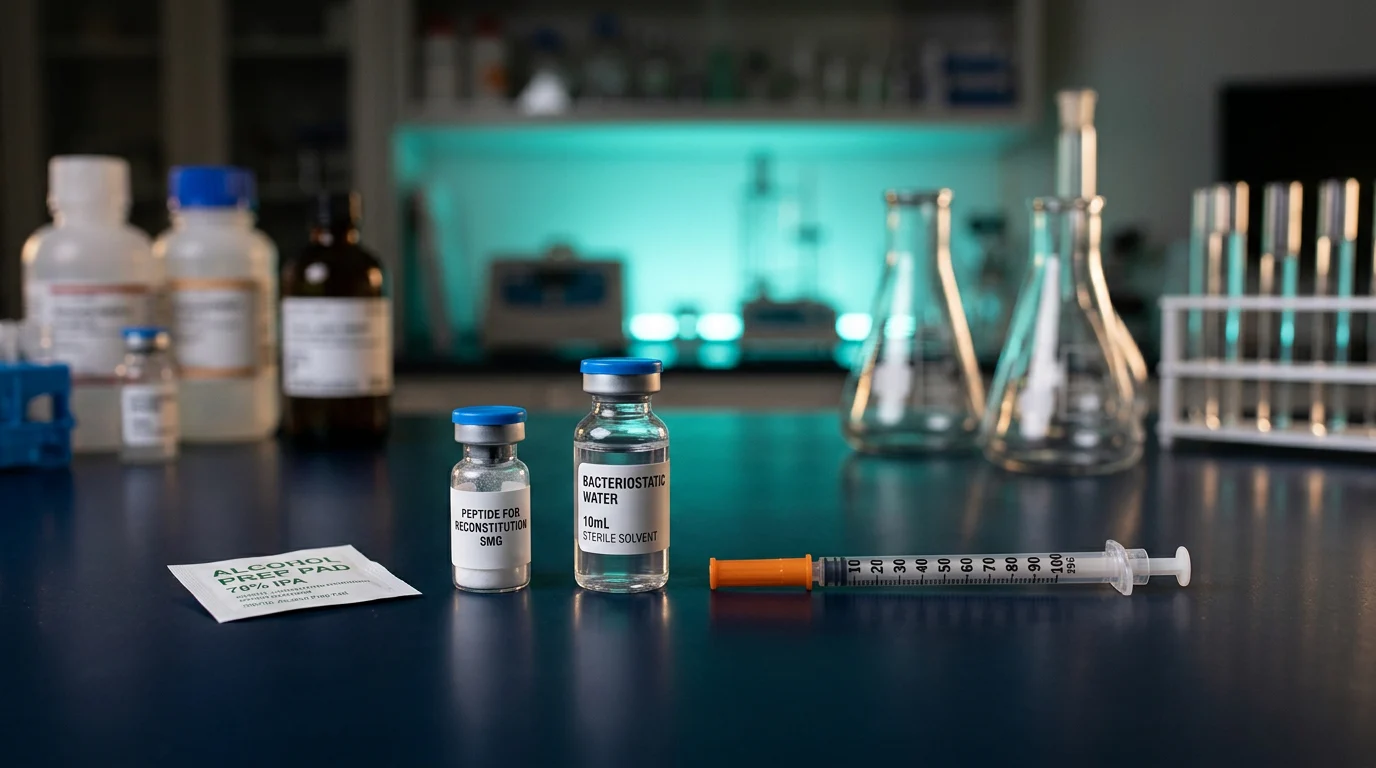
How to Reconstitute Peptides: Step-by-Step Guide
Proper reconstitution is critical for peptide efficacy and safety. Here is a complete step-by-step guide with calculation examples.
Are Peptides Legal? A Clear Guide to Peptide Regulations
The legal status of peptides varies by type, jurisdiction, and intended use. Here is a clear breakdown of what is and is not permitted.
KPV Peptide Benefits: Anti-Inflammatory Powerhouse Explained
KPV peptide is a potent anti-inflammatory derived from alpha-MSH. Here is what the research shows about its benefits for gut health, skin, and immune function.
IGF-1 Peptide: Insulin-Like Growth Factor Research Guide
IGF-1 is a peptide hormone central to growth, muscle development, and tissue repair. IGF-1 LR3, its enhanced analog, offers extended activity and greater potency for research applications.
Frequently Asked Questions
The Wolverine stack is a combination of BPC-157 and TB-500 peptides used together for accelerated tissue healing and recovery. BPC-157 upregulates growth factors and promotes angiogenesis, while TB-500 promotes cell migration, reduces inflammation, and supports tissue remodeling. Together they create a multi-pathway healing protocol.