Editorial Review
Author: PurePep Vital Research Editorial Team|Reviewed by: Scientific Compliance Reviewer
Last reviewed: February 2026
Joint Biology and the Mechanisms of Articular Degeneration
Joints are complex organs. They contain articular cartilage, synovial membrane, synovial fluid, subchondral bone, ligaments, tendons, and a joint capsule. All of these parts work together to allow smooth, pain-free movement.
To understand joint degeneration — and how peptides may intervene — each component and its breakdown pathways must be examined.
Articular cartilage has no blood vessels or nerves. It is mostly made of type II collagen fibers, proteoglycans (gel-like proteins that trap water, mainly aggrecan), and water (65-80% of its weight). A small number of cells called chondrocytes — just 1-5% of the tissue — maintain it.
This lack of blood supply and low cell count sharply limits repair. When cartilage is damaged, chondrocytes cannot get enough repair factors or multiply fast enough to rebuild the tissue. This is the core challenge that peptides for joint repair research aims to address.
Osteoarthritis (OA) is the most common joint disease, affecting over 500 million people worldwide. It involves progressive cartilage breakdown caused by an imbalance: matrix degradation outpaces matrix production. Key enzymes driving this destruction include:
- Matrix metalloproteinases (MMP-1, MMP-3, MMP-13)
- Aggrecanases (ADAMTS-4, ADAMTS-5)
Pro-inflammatory cytokines — IL-1β, TNF-α, and IL-6 — released by activated synoviocytes and chondrocytes switch on these enzymes. The resulting debris further fuels inflammation, creating a self-amplifying destructive cycle.
Rheumatoid arthritis (RA) has a different origin. The immune system attacks the synovial membrane, and the resulting inflammation secondarily destroys cartilage and bone. Peptides for rheumatoid arthritis research must therefore address immune dysregulation alongside tissue repair. For foundational peptide biology, see our peptide education guide.
BPC-157: The Gastric Pentadecapeptide in Joint Research
BPC-157 (Body Protection Compound-157) is a 15-amino acid peptide found in human gastric juice. It shows strong tissue-protective and regenerative effects across musculoskeletal tissues, including tendons, ligaments, cartilage, and bone. Its value in joint research comes from its ability to boost growth factors, promote new blood vessel formation, and reduce inflammation.
A study in the Journal of Orthopaedic Research (2019) found that BPC-157 sped up Achilles tendon healing by 45% compared to controls. Treated tissues had better collagen fiber organization and higher tensile strength. In a separate ligament injury model, BPC-157 increased ligament breaking force by 84% at 14 days, as reported in Journal of Physiology and Pharmacology (2014).
BPC-157 protects joints through several converging pathways:
- Growth factor upregulation: BPC-157 raises levels of VEGF (vascular endothelial growth factor), FGF-2 (fibroblast growth factor-2), and EGF receptor activation. These growth factors drive angiogenesis — new blood vessel formation — in the poorly vascularized tissues around joints. Better blood supply improves nutrient delivery and waste removal needed for repair.
- Nitric oxide system modulation: BPC-157 interacts with the nitric oxide (NO) system, which controls blood vessel tone, inflammatory signaling, and chondrocyte metabolism. Research shows BPC-157 can counteract both excess and deficient NO signaling, restoring balance.
- Anti-inflammatory effects: BPC-157 lowers pro-inflammatory cytokines TNF-α and IL-6 that drive cartilage matrix breakdown. It also promotes anti-inflammatory mediators.
- Tendon-to-bone integration: At entheses — the junctions where tendons attach to bone, and common sites of injury — BPC-157 promotes organized fibrocartilage formation typical of healthy tissue.
For comprehensive BPC-157 research, see our BPC-157 peptide guide.
TB-500 (Thymosin Beta-4) for Synovial and Soft Tissue Research
TB-500 is a synthetic fragment of thymosin beta-4 (Tβ4), a 43-amino acid peptide and one of the most abundant proteins inside cells. Tβ4 plays roles in actin assembly, cell migration, blood vessel growth, and wound healing. For joint research, TB-500 stands out for its effects on synovial tissue repair, soft tissue healing, and inflammation control.
A key study in the Annals of the New York Academy of Sciences (2007) identified thymosin beta-4 as a major tissue repair mediator. It accelerated skin wound healing by 42% in preclinical models by promoting cell migration, new blood vessels, and extracellular matrix deposition. Later studies extended these findings to tendons, muscles, and joints.
TB-500’s main joint-repair mechanism involves actin — the structural protein that powers cell movement. TB-500 binds to G-actin monomers (single actin units) and promotes their assembly into F-actin filaments. These filaments drive cells toward damaged tissue. This matters in joints because chondrocytes and synoviocytes often struggle to reach injury sites through the dense cartilage matrix.
TB-500 also has strong anti-inflammatory effects in joint models. A study in Expert Opinion on Biological Therapy (2018) showed that thymosin beta-4 reduced MMP-1 and MMP-3 expression in synovial fibroblasts stimulated with IL-1β.
This directly counteracts the enzyme cascade that destroys cartilage in both osteoarthritis and inflammatory arthritis. TB-500 also reduces NF-κB activation — a central switch in joint inflammatory signaling.
This combination of cell migration support, blood vessel growth, and anti-inflammatory activity makes TB-500 one of the most studied peptides for joints. Explore TB-500 mechanisms in our TB-500 peptide guide.
Free Peptide Calculator
Calculate precise reconstitution volumes and dosages with our peptide calculator tool.
Collagen Peptides Type II for Cartilage Research
Type II collagen is the main structural protein in articular cartilage, making up roughly 90-95% of its collagen content. Two distinct types of collagen peptides are studied for joint research: undenatured type II collagen (UC-II) for immune modulation, and hydrolyzed collagen peptides for matrix support.
Undenatured Type II Collagen (UC-II): UC-II works through oral tolerance — a process where gut-associated lymphoid tissue (GALT, the immune tissue lining the intestine) is exposed to native type II collagen fragments. This exposure trains regulatory T-cells to suppress the immune attack on cartilage.
A randomized controlled trial in the International Journal of Medical Sciences (2009) tested UC-II at 40 mg daily. It significantly reduced joint pain scores and improved flexibility in subjects with osteoarthritis. UC-II outperformed a glucosamine-chondroitin combination over 90 days. The WOMAC pain score improved by 33% in the UC-II group.
Hydrolyzed Collagen Peptides: Hydrolyzed collagen peptides (typically 1,000-5,000 dalton molecular weight) provide bioavailable amino acid building blocks. The key amino acids — glycine, proline, and hydroxyproline — stimulate chondrocyte metabolism and new collagen production.
A study in Current Medical Research and Opinion (2008) gave 10 g daily of hydrolyzed collagen to 147 athletes with activity-related joint pain. Over 24 weeks, subjects showed statistically significant improvements in joint pain during walking, standing, and carrying objects.
The difference between these two approaches matters for research design:
- UC-II targets the immune component of joint disease — more relevant to rheumatoid arthritis and the inflammatory side of OA
- Hydrolyzed collagen provides structural support and metabolic stimulation — more relevant to the degenerative aspects of OA
For research on collagen peptide outcomes, see our collagen peptide results guide.
Get Peptide Research Updates
New research, product launches, and exclusive offers. No spam.
GHK-Cu for Joint Inflammation and Tissue Remodeling
GHK-Cu (glycyl-L-histidyl-L-lysine copper complex) influences over 4,000 genes tied to tissue remodeling. This makes it one of the most broadly active peptides in regenerative research. For joint health, GHK-Cu’s effects on matrix remodeling, anti-inflammatory gene expression, and growth factor signaling directly apply to both degenerative and inflammatory joint disease.
A study in Genome Medicine (2014) mapped GHK-Cu’s gene expression changes. It found significant upregulation of genes for:
- Collagen synthesis (COL1A1, COL3A1)
- Proteoglycan production (decorin, versican)
- Antioxidant defense (SOD1, SOD3, glutathione S-transferase)
At the same time, GHK-Cu suppressed genes for pro-inflammatory mediators, including IL-6, IL-8, and NF-κB pathway components. This dual action — boosting matrix repair while dampening inflammatory breakdown — tackles both sides of the imbalance that drives joint damage.
The copper in GHK-Cu plays a specific role in joint biology. Copper is a cofactor for lysyl oxidase — the enzyme that cross-links collagen and elastin fibers. Proper cross-linking is critical for the mechanical strength of cartilage, tendons, and ligaments.
Too little cross-linking weakens tensile strength. Too much (seen in advanced glycation end-product buildup) reduces flexibility. GHK-Cu delivers copper in a bioavailable form that supports appropriate cross-linking.
GHK-Cu also promotes the differentiation of mesenchymal stem cells toward the chondrogenic (cartilage-forming) lineage in preclinical models. Joint repair depends on progenitor cells becoming functional chondrocytes — a process that declines with age and chronic inflammation. For detailed GHK-Cu research, see our GHK-Cu peptide guide.
Important Disclaimer
All products and information on this page are intended strictly for laboratory and scientific research use only. Not for human consumption. These statements have not been evaluated by the FDA.
Pentosan Polysulfate: Mechanisms in Joint Disease Research
Pentosan polysulfate sodium (PPS) is a semi-synthetic compound derived from beechwood hemicellulose. It has been used in veterinary medicine for decades to treat osteoarthritis in horses and dogs. PPS is also approved for human use in treating interstitial cystitis (as Elmiron). Its joint disease mechanisms span cartilage preservation and synovial health through multiple pathways.
Chondroprotective Mechanisms: PPS blocks metalloproteinases (MMP-3, MMP-13) and aggrecanases (ADAMTS-4, ADAMTS-5) — the primary enzymes that break down cartilage matrix. Research in Osteoarthritis and Cartilage (2006) showed PPS reduced aggrecan degradation by 60% in cartilage explant models stimulated with IL-1β. This enzyme-blocking effect directly preserves the proteoglycan matrix that gives cartilage its compressive resistance and water-holding capacity.
Fibrinolytic and Hemorheological Effects: PPS improves blood flow in subchondral bone — the bone layer sitting directly beneath articular cartilage. Subchondral bone health is now seen as a key factor in OA development.
Sclerosis (hardening), vascular stasis, and high intraosseous pressure in this layer can starve the overlying cartilage of nutrients. PPS improves subchondral microcirculation, addressing a root cause that surface-focused treatments may miss.
Synovial Fluid Enhancement: PPS stimulates hyaluronic acid production by synoviocytes. This improves the viscoelastic properties of synovial fluid, restoring its lubrication and shock absorption functions. In osteoarthritic joints, these fluid properties deteriorate, increasing mechanical stress on already-damaged cartilage.
A systematic review in BioDrugs (2019) evaluated clinical evidence for PPS in osteoarthritis. It concluded that intramuscular PPS produced significant improvements in pain, function, and joint stiffness compared to placebo across multiple trials. The evidence supports further study of PPS as a disease-modifying intervention — not just a symptom management tool.
Combining Peptides for Comprehensive Joint Research
Joint disease involves multiple processes happening at once: cartilage matrix breakdown, synovial inflammation, subchondral bone changes, soft tissue laxity, and failed repair. Research protocols increasingly test peptide combinations that address these complementary mechanisms. The rationale is strong, but careful design is needed to establish safety and trace effects to specific components.
BPC-157 + TB-500 Combination: This is the most widely discussed pairing in joint research. BPC-157 upregulates growth factors and promotes new blood vessel formation. TB-500 drives cell migration and reduces inflammation.
The mechanisms do not overlap: BPC-157 creates the growth factor environment for repair, while TB-500 moves the cells needed to carry out that repair.
Controlled studies on this specific combination are limited, but the non-overlapping mechanisms provide a rational basis for combined investigation.
Peptide + Collagen Approach: Combining tissue-repair peptides (BPC-157, TB-500) with collagen peptides (type II hydrolyzed or UC-II) targets both the signaling environment and the structural building blocks. Repair peptides activate chondrocytes and boost matrix production. Collagen peptides supply the amino acid substrate and immune modulation that support the repair process.
GHK-Cu as Adjunct: GHK-Cu’s broad gene-modulating effects can complement the more targeted actions of BPC-157 and TB-500. Its copper-dependent effects on collagen cross-linking and its ability to steer mesenchymal stem cells toward cartilage formation address repair aspects not directly covered by the other peptides.
Researchers designing combination protocols should consider sequential introduction — adding one compound at a time with washout periods. This approach establishes individual tolerability and baseline effects before evaluating combination outcomes. For broader healing peptide research, see our peptides for healing guide.
Research Protocols and Outcome Assessment for Joint Peptides
Evaluating peptides for joint pain in research settings requires well-chosen outcome measures, validated tools, and attention to the unique challenges of cartilage research. In particular, structural changes in cartilage develop slowly — much slower than symptom improvements.
Validated Outcome Measures: Standard tools for joint research include:
- WOMAC (Western Ontario and McMaster Universities Osteoarthritis Index) — for hip and knee OA
- VAS (Visual Analog Scale) — for pain assessment
- KOOS (Knee Injury and Osteoarthritis Outcome Score) — for knee-specific outcomes
- SF-36 — for quality of life
These validated instruments allow cross-study comparison and regulatory acceptance of clinical endpoints.
Imaging Endpoints: MRI is the gold standard for structural joint assessment. It can measure cartilage thickness, defect size, synovial inflammation (synovitis), bone marrow lesions, and meniscal integrity. The MOAKS (MRI Osteoarthritis Knee Score) provides a semi-quantitative scoring system. However, MRI changes in cartilage typically take 12-24 months to reach statistical significance. This means structural endpoint studies require long durations.
Biomarker Endpoints: Serum and synovial fluid biomarkers detect treatment effects earlier than imaging. Key markers include:
- CTX-II (C-telopeptide of type II collagen) — measures cartilage degradation rate
- COMP (cartilage oligomeric matrix protein) — reflects cartilage turnover
- hs-CRP — quantifies systemic inflammation
These biomarkers can show changes within 4-8 weeks, enabling shorter proof-of-concept studies before committing to longer imaging trials.
Animal Model Selection: Preclinical joint research commonly uses three models:
- Anterior cruciate ligament transection (ACLT) — for post-traumatic OA
- Monoiodoacetate (MIA) injection — for rapid cartilage degeneration
- Collagen-induced arthritis (CIA) — for rheumatoid arthritis
Each model mimics different aspects of human joint disease. Peptide effects should ideally be tested across multiple models before drawing translational conclusions. For guidance on peptide administration, see our peptide therapy guide.
Peptides for Osteoarthritis: Cartilage-Specific Research
Osteoarthritis (OA) involves progressive articular cartilage degradation, subchondral bone remodeling, and synovial inflammation. Standard treatments target symptoms. Peptide research instead targets the underlying matrix biology.
BPC-157 has been studied in OA models for its effects on cartilage matrix integrity and inflammatory mediator suppression. Preclinical data suggests it speeds up chondrocyte activity and reduces MMP expression — the enzymes that break down joint tissue.
Type II collagen peptides (UC-II, undenatured) work through a different mechanism. They induce oral tolerance via gut-associated lymphoid tissue, reducing T-cell–mediated cartilage attack. This is distinct from hydrolyzed collagen supplements.
Pentosan polysulfate (PPS) is approved in veterinary medicine for OA and has been tested in human knee OA trials. It blocks complement activation and metalloproteinase activity in cartilage models.
No peptide is approved for OA treatment. Research compounds are for laboratory use only. See healing peptide research for related tissue repair models.
Important Disclaimer — For Research Use Only
The information provided is for educational and research purposes only. All peptides discussed or linked on this site are intended strictly for laboratory and scientific research use only (RUO) and are not for human consumption, injection, ingestion, or any therapeutic application. These products have not been evaluated or approved by the FDA or any regulatory body and are not intended to diagnose, treat, cure, or prevent any disease or condition. Reliance on this content is at your own risk. Consult qualified professionals for any health-related decisions. PurePep Vital disclaims all liability for misuse. Products are offered by third-party retailers for research use only.
PurePep Vital is an editorial publisher, vendor comparison resource, and affiliate deal tracker. We do not manufacture, compound, sell, ship, test, prescribe, or handle peptide products. Purchases are completed directly through third-party retailers. PurePep Vital is not a compounding pharmacy or chemical compounding facility as defined under 503A of the Federal Food, Drug, and Cosmetic Act. PurePep Vital is not an outsourcing facility as defined under 503B of the Federal Food, Drug, and Cosmetic Act.
Disclosure: This page contains affiliate links. We may earn from qualifying purchases. See our full disclosure.
Need deals after the research?
Use the deals hub to compare current offers, partner codes, and research news. We recommend retailers that provide quality signals when available.
Explore Our Guides
Related Articles
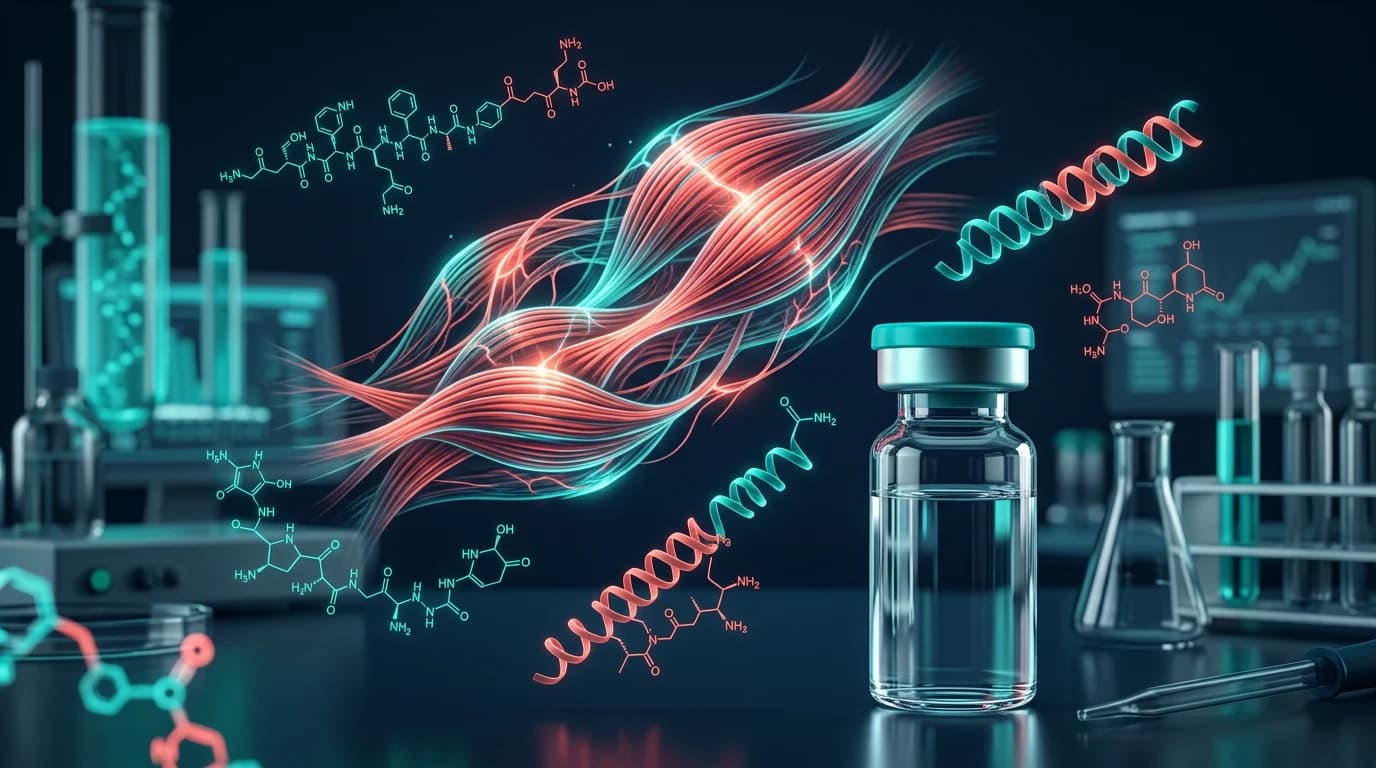
BPC-157 Peptide: The Complete Healing Research Guide
BPC-157 is a pentadecapeptide derived from human gastric juice with extraordinary tissue-healing properties. Here is what decades of research reveal about its mechanisms, benefits, and applications.
TB-500 Peptide: Tissue Repair and Thymosin Beta-4
TB-500 is a synthetic fragment of thymosin beta-4, a naturally occurring 43-amino-acid protein involved in cell migration, differentiation, and tissue repair. Here is what the research reveals.
Peptides for Healing: BPC-157, TB-500, and Recovery
Healing peptides like BPC-157 and TB-500 target the cellular mechanisms that drive tissue repair. Here is what the research reveals about their recovery potential.
GHK-Cu Peptide: Benefits, Dosing, and Copper Peptide Research
GHK-Cu is a naturally occurring copper-binding tripeptide with over 4,000 gene-regulatory effects. Here is what the research reveals about its benefits for skin, tissue repair, and longevity.
Frequently Asked Questions
The most extensively studied peptides for joint research include BPC-157 (growth factor upregulation and tendon healing — 45% accelerated Achilles repair in preclinical models), TB-500/thymosin beta-4 (cell migration and anti-inflammatory effects), type II collagen peptides (both undenatured UC-II for immune modulation and hydrolyzed for matrix support), GHK-Cu (gene modulation affecting over 4,000 genes including collagen synthesis and anti-inflammatory pathways), and pentosan polysulfate (MMP inhibition and subchondral bone circulation improvement).