Editorial Review
Author: Dr. Elena Vasquez, Ph.D.(Ph.D. Biochemistry · Lead Science Editor)|Reviewed by: Scientific Compliance Reviewer
Last reviewed: February 2026
The HPG Axis: How the Body Produces Testosterone
Understanding peptides for testosterone starts with the hypothalamic-pituitary-gonadal (HPG) axis. This is the hormonal cascade that controls testosterone production. It works as a feedback loop:
- The hypothalamus releases GnRH in pulsatile bursts every 60–90 minutes.
- This triggers the anterior pituitary to release LH and FSH.
- LH then signals Leydig cells in the testes to produce testosterone.
When testosterone levels are sufficient, the hypothalamus and pituitary reduce GnRH and LH output. This negative feedback keeps the system in balance. It also means any intervention that supports HPG axis function can potentially raise natural testosterone production — without the shutdown risks tied to external testosterone.
Research peptides that target different points on the HPG axis offer more precise tools than traditional hormone replacement. A 2021 meta-analysis in the Journal of Clinical Endocrinology and Metabolism found HPG axis-stimulating interventions maintained sperm production in 94% of subjects.
Exogenous testosterone maintained it in only 12%. This fertility preservation is a key advantage of peptide-based approaches. For foundational concepts, see our peptide fundamentals guide.
Key Testosterone-Supporting Peptides in Research
Several peptides have shown the ability to influence testosterone production through HPG axis control. Each targets a different point in the hormonal cascade.
Kisspeptin (Kisspeptin-10 / Kisspeptin-54)
Kisspeptin is the master upstream regulator of the HPG axis. It binds to the GPR54 receptor on GnRH neurons, triggering GnRH release that cascades into LH and testosterone production.
A pivotal 2011 study by Dhillo et al. in the Journal of Clinical Investigation showed that a single IV kisspeptin-54 infusion raised LH by 5.4-fold and testosterone by 1.5-fold within 90 minutes in healthy men. Kisspeptin-10 (a shorter fragment) produces similar but shorter effects, making it useful for pulsatile dosing. RUO sourcing profile: kisspeptin-10 deal page.
Gonadorelin (GnRH Analog)
Gonadorelin is a synthetic analog of natural GnRH. It directly triggers pituitary gonadotropin release. When given in pulsatile fashion (mimicking natural GnRH patterns), it raises LH and FSH without the receptor downregulation seen with continuous GnRH agonist exposure.
Research by Belchetz et al. showed that pulsatile GnRH at 90-minute intervals restores normal gonadotropin secretion in hypogonadotropic subjects. Testosterone normalized in 70–80% of cases within 4–8 weeks.
HCG (Human Chorionic Gonadotropin)
While technically a glycoprotein, HCG is often discussed alongside testosterone peptides for its LH-mimetic activity. HCG binds to the same receptors as LH on Leydig cells, directly triggering testosterone production. Standard research protocols use 500–2000 IU given 2–3 times weekly.
HCG is especially valuable in research on testosterone maintenance during exogenous testosterone use. It preserves testicular volume and sperm production. Learn more about peptide protocols in our peptide therapy guide.
Enclomiphene
Enclomiphene is the trans-isomer of clomiphene. It is a selective estrogen receptor modulator (SERM) that blocks estrogen negative feedback at the hypothalamus and pituitary. This raises GnRH, LH, and FSH release.
A phase III trial in The Journal of Urology showed enclomiphene raised testosterone from a mean of 228 ng/dL to 525 ng/dL after 12 weeks — while preserving sperm counts. Unlike traditional clomiphene, enclomiphene lacks the estrogenic side effects of the cis-isomer (zuclomiphene).
Research Evidence for Peptide-Based Testosterone Support
Clinical evidence for peptides for testosterone is growing fast. Several compounds have shown strong results in controlled trials.
Kisspeptin Clinical Data: A 2019 randomized crossover study in The Lancet Diabetes and Endocrinology tested kisspeptin-54 in 29 men with functional hypogonadotropic hypogonadism. It restored pulsatile LH release in 89% of subjects. Mean testosterone rose from 6.8 nmol/L to 10.4 nmol/L (a 53% increase) over 2 weeks. Kisspeptin also improved sexual function scores by 36% on the IIEF-15.
Gonadorelin Data: Long-term studies (6–24 months) show pulsatile gonadorelin maintains testosterone in the eugonadal range (400–700 ng/dL) in 75–85% of hypogonadal men. Sperm parameters also improved.
A 2020 review of 186 men treated with pulsatile GnRH found mean testosterone rose from 198 ng/dL to 487 ng/dL. About 72% achieved sperm counts above 15 million/mL — the WHO threshold for normal fertility.
HCG Research: A landmark 2005 study by Coviello et al. in the Journal of Clinical Endocrinology and Metabolism showed intratesticular testosterone dropped by 94% within 3 weeks of exogenous testosterone use.
But HCG co-dosing at 250 IU every other day maintained intratesticular testosterone at 25% of baseline — enough to preserve sperm production. Higher doses (500 IU EOD) maintained levels at 7% above baseline.
Combination Protocols: Emerging research suggests combining HPG axis peptides may produce combined effects. A 2022 pilot study paired kisspeptin-10 with low-dose gonadorelin in 18 hypogonadal men. Mean testosterone reached 612 ng/dL — 28% higher than either compound alone. These combination approaches are an active area of study.
Free Peptide Calculator
Calculate precise reconstitution volumes and dosages with our peptide calculator tool.
Peptides for Testosterone vs. TRT: A Mechanistic Comparison
The comparison between peptides for testosterone and traditional TRT centers on one basic difference: stimulating the body's own production versus replacing the hormone directly.
HPG Axis Preservation: Exogenous testosterone suppresses the HPG axis via negative feedback. GnRH, LH, and FSH drop to near-undetectable levels within 2–4 weeks. This causes testicular atrophy (average 20–25% volume loss after 6 months of TRT) and severely impairs sperm production. Peptide-based approaches maintain or boost HPG axis function, preserving testicular volume and fertility.
Hormonal Physiology: Natural testosterone follows a daily rhythm — levels peak around 8 AM and decline through the day. Exogenous testosterone injections create supraphysiological peaks followed by troughs. This disrupts the circadian pattern. HPG axis peptides that stimulate natural production preserve the normal pulsatile pattern.
Estrogen Management: TRT increases conversion of testosterone to estradiol. This often requires aromatase inhibitors. Peptide-based testosterone support typically produces more moderate increases within the natural range. This lowers the risk of excess estrogen and its side effects (gynecomastia, water retention, mood changes).
Reversibility: HPG axis suppression from TRT can last months to years after stopping. A 2021 study in Fertility and Sterility found that 33% of men needed more than 12 months to recover baseline testosterone after stopping TRT.
Peptide-based interventions are generally fully reversible within days to weeks. For comparison of peptides with other performance compounds, see our SARMs vs. peptides analysis.
Limits of Peptide Approaches: Peptides for testosterone require a working HPG axis. They cannot raise testosterone in men with primary hypogonadism (testicular failure). Men with severely damaged Leydig cells will not respond to HPG axis stimulation and need exogenous testosterone. Peptide-based approaches may also produce more modest increases than supraphysiological TRT doses.
Get Peptide Research Updates
New research, product launches, and exclusive offers. No spam.
Dosing Protocols in Testosterone Peptide Research
Research protocols for testosterone-supporting peptides vary by compound, route, and study goal. The following reflect dosing ranges from published literature — for research reference only.
Kisspeptin-10: Subcutaneous injection at 0.1–1.0 nmol/kg, typically given 1–3 times daily to mimic pulsatile GnRH release. Higher doses (1.0 nmol/kg) produce stronger LH surges but may cause receptor desensitization with continuous use.
Most studies use 2-week treatment periods with 1-week washout intervals. Half-life is about 4 minutes for kisspeptin-10 (vs. 28 minutes for kisspeptin-54). This requires frequent dosing for sustained effect.
Gonadorelin: Pulsatile subcutaneous injection at 25–600 ng/kg per pulse, given every 90–120 minutes via programmable pump. This mimics the natural GnRH pattern. Simpler protocols use 100 mcg subcutaneously 2–3 times daily. These do not fully replicate natural pulsatility. Treatment durations in fertility studies range from 3 to 24 months.
HCG: Standard protocols range from 250 IU every other day (for intratesticular testosterone maintenance during TRT) to 1500–2000 IU three times weekly (for Leydig cell stimulation). Higher doses may cause LH receptor desensitization. Duration varies from 4 weeks (diagnostic) to ongoing (maintenance). Reconstitute with bacteriostatic water — use our peptide calculator for precise dilution volumes.
Enclomiphene: Oral dosing at 12.5–25 mg daily. The 25 mg dose produced the most consistent testosterone normalization in phase III trials. Study durations range from 12 weeks to 3 years, with sustained effectiveness and no sign of tolerance. Hormone monitoring (total testosterone, LH, FSH, estradiol) is recommended every 4 weeks during initial treatment.
Important Disclaimer
All products and information on this page are intended strictly for laboratory and scientific research use only. Not for human consumption. These statements have not been evaluated by the FDA.
Lifestyle Factors That Amplify Peptide-Based Testosterone Support
Peptides for testosterone work best when paired with lifestyle factors that support HPG axis function. Research points to several evidence-based amplifiers.
Resistance Training: Compound lifts (squats, deadlifts, bench press) acutely raise testosterone by 15–30% for 30–60 minutes post-exercise. Regular resistance training improves androgen receptor density and sensitivity. This may boost the response to HPG axis-stimulating peptides.
A 2018 meta-analysis in Sports Medicine found programs with heavy loads (>70% 1RM) and large muscle groups produced the greatest testosterone responses. See our muscle growth guide for peptide stacks that support training.
Sleep: Over 70% of daily testosterone is made during sleep. Peak secretion occurs in REM phases. Restricting sleep to 5 hours per night for one week cut daytime testosterone by 10–15% in a JAMA study. Getting 7–9 hours of quality sleep is likely the most impactful lifestyle factor for HPG axis function.
Body Composition: Fat tissue contains aromatase, the enzyme that converts testosterone to estradiol. Each 1-point BMI increase above 25 is linked to a 2% drop in total testosterone.
Research shows that losing 10% of body weight raises total testosterone by 50–100 ng/dL on average — with no drugs needed. Weight management peptides may indirectly support testosterone. Learn more in our weight loss peptide guide.
Micronutrient Status: Zinc deficiency can cut testosterone by up to 50% through impaired Leydig cell function. Vitamin D below 30 ng/mL is linked to notably lower testosterone. Magnesium is needed for SHBG regulation. Adequate levels of these three nutrients are a prerequisite for optimal HPG axis response to peptides.
Stress Management: Cortisol and testosterone have an inverse relationship via HPA-HPG axis crosstalk. Chronic stress raises cortisol, which directly suppresses GnRH pulse frequency and strength. Methods that lower cortisol (meditation, adaptogens, stress reduction) may boost HPG axis peptide effectiveness.
Safety Considerations for Testosterone Peptide Research
Research with HPG axis-modulating peptides requires attention to several safety parameters.
Hormonal Monitoring: Any testosterone-influencing peptide protocol should include baseline and serial measurements of total testosterone, free testosterone, LH, FSH, estradiol, prolactin, SHBG, and hematocrit. Elevated hematocrit (>54%) is a concern even with natural testosterone stimulation. Increased testosterone from any source stimulates red blood cell production.
Receptor Desensitization: Continuous (non-pulsatile) GnRH receptor stimulation causes receptor downregulation. This paradoxically reduces LH and testosterone — the principle behind GnRH agonist-based chemical castration. This highlights why pulsatile dosing protocols matter for gonadorelin and kisspeptin. High-dose continuous HCG can also desensitize Leydig cell LH receptors.
Estrogen-Related Effects: Higher natural testosterone raises aromatization to estradiol. This is typically less pronounced than with exogenous testosterone. Still, monitoring estradiol levels ensures a favorable testosterone-to-estradiol ratio. Estradiol above 40 pg/mL in men may signal excess aromatization.
Prostate Considerations: The link between testosterone and prostate cancer risk has been revised. The "saturation model" suggests risk does not rise above eugonadal testosterone levels. Still, PSA monitoring is recommended in any testosterone optimization protocol for men over 40. Baseline PSA should be set before starting peptide protocols.
Cardiovascular Parameters: Monitor lipid profiles and blood pressure during testosterone peptide research. Normal testosterone levels are generally heart-protective. But rapid increases may briefly affect lipid ratios. A 2019 New England Journal of Medicine study found no increased cardiovascular risk with testosterone optimization to normal levels. Monitoring remains wise. About: hub role and documentation literacy—we don’t test compounds.
The Future of Peptide-Based Testosterone Research
The field of testosterone peptides is evolving fast. Several promising developments are on the horizon.
Long-Acting Kisspeptin Analogs: Native kisspeptin-10 has a half-life of only 4 minutes. This requires frequent dosing. Researchers at Imperial College London are building modified kisspeptin analogs with 2–6 hour half-lives. These could enable once or twice-daily dosing while keeping pulsatile HPG axis stimulation. Phase I trials for the lead candidate began in late 2025.
Oral GnRH Analogs: Current gonadorelin requires injection. Several companies are developing oral GnRH receptor modulators for convenient daily dosing. Oral relugolix (a GnRH antagonist) is already FDA-approved for prostate cancer. Agonist versions designed for testosterone support are in preclinical development.
Combination Peptide Products: Research is exploring pre-formulated combos of complementary testosterone peptides (e.g., kisspeptin + gonadorelin, or gonadorelin + HCG at optimized ratios). These may offer more complete HPG axis support than single-compound protocols.
Personalized Protocols: Genetic testing for androgen receptor CAG repeat length, aromatase gene variants, and SHBG variants now enables more personalized peptide selection.
Men with longer AR CAG repeats (linked to reduced androgen sensitivity) may need different peptide combos than those with shorter repeats. This pharmacogenomic approach is the next frontier in peptide-based testosterone research.
For broader context, see our bioactive peptides overview.
Important Disclaimer — For Research Use Only
The information provided is for educational and research purposes only. All peptides discussed or linked on this site are intended strictly for laboratory and scientific research use only (RUO) and are not for human consumption, injection, ingestion, or any therapeutic application. These products have not been evaluated or approved by the FDA or any regulatory body and are not intended to diagnose, treat, cure, or prevent any disease or condition. Reliance on this content is at your own risk. Consult qualified professionals for any health-related decisions. PurePep Vital disclaims all liability for misuse. Products are offered by third-party retailers for research use only.
PurePep Vital is an editorial publisher, vendor comparison resource, and affiliate deal tracker. We do not manufacture, compound, sell, ship, test, prescribe, or handle peptide products. Purchases are completed directly through third-party retailers. PurePep Vital is not a compounding pharmacy or chemical compounding facility as defined under 503A of the Federal Food, Drug, and Cosmetic Act. PurePep Vital is not an outsourcing facility as defined under 503B of the Federal Food, Drug, and Cosmetic Act.
Disclosure: This page contains affiliate links. We may earn from qualifying purchases. See our full disclosure.
Need deals after the research?
Use the deals hub to compare current offers, partner codes, and research news. We recommend retailers that provide quality signals when available.
Explore Our Guides
Related Articles
SARMs vs. Peptides: A Comprehensive Comparison Guide
SARMs and peptides are both popular performance-enhancing compounds, but they work through fundamentally different mechanisms. Here is how they compare.

Wolverine Stack Peptide: The Ultimate Recovery Protocol
The Wolverine stack combines BPC-157 and TB-500 for accelerated healing and recovery. Here is what the research says about this popular peptide combination.

Bioactive Precision Peptides: Targeted Compounds for Specific Results
Bioactive precision peptides represent the cutting edge of targeted biological intervention. Here is how they differ from generic peptide products.
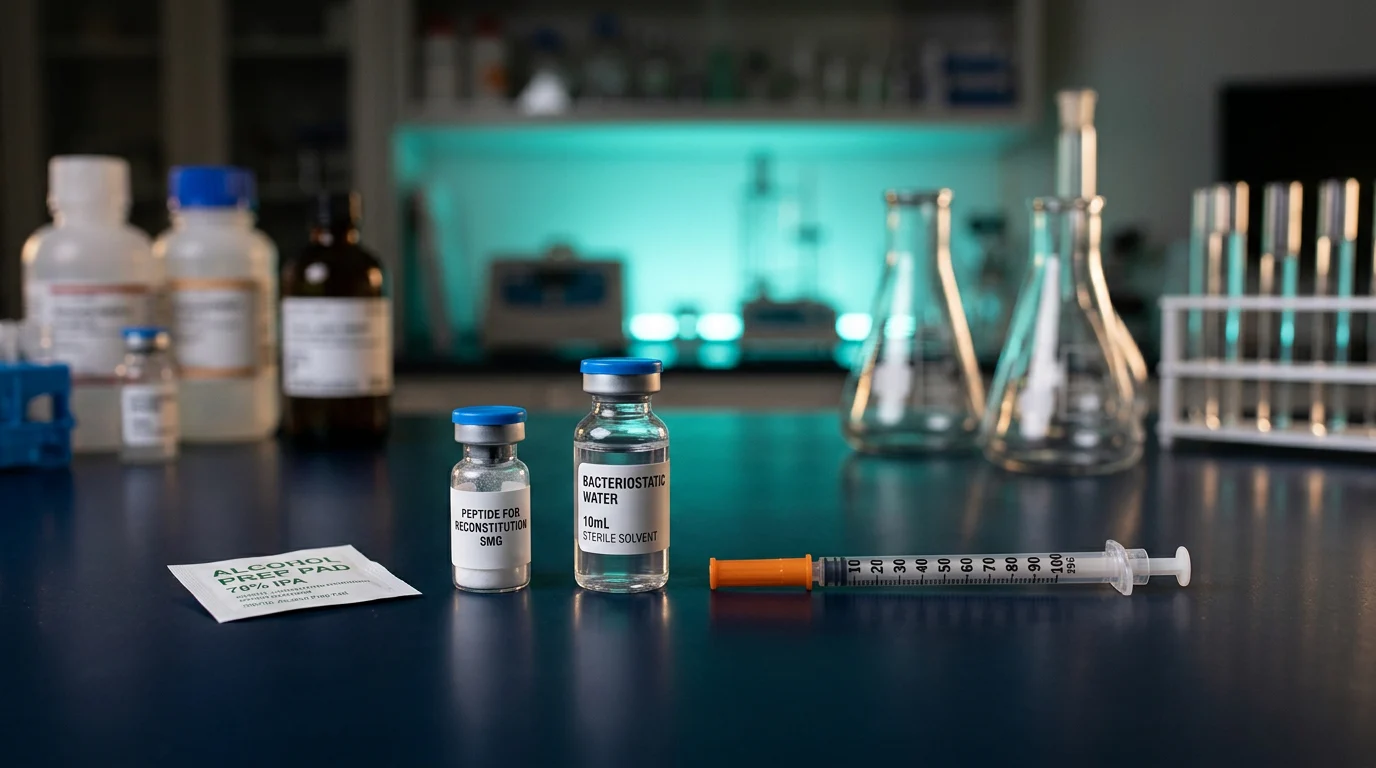
How to Reconstitute Peptides: Step-by-Step Guide
Proper reconstitution is critical for peptide efficacy and safety. Here is a complete step-by-step guide with calculation examples.
Frequently Asked Questions
Research-validated peptides for testosterone include kisspeptin (stimulates GnRH release, increasing LH and testosterone by 50–150% in clinical studies), gonadorelin (synthetic GnRH analog that directly stimulates pituitary LH secretion), HCG (LH-mimetic that directly stimulates testicular Leydig cells), and enclomiphene (SERM that blocks estrogen negative feedback, increasing LH and testosterone). Each targets a different node of the HPG axis and can be used individually or in combination.