Editorial Review
Author: PurePep Vital Research Editorial Team|Reviewed by: Scientific Compliance Reviewer
Last reviewed: February 2026
Defining Research Peptides: What They Are and Are Not
Research peptides are synthetically manufactured short chains of amino acids — typically ranging from 2 to 50 residues — produced specifically for laboratory investigation, scientific study, and in vitro or in vivo experimental use.
They are designated as "research use only" (RUO), meaning they are not manufactured, marketed, or sold as drugs, dietary supplements, or consumer products.
This designation has specific regulatory, manufacturing, and quality implications that distinguish research peptides from peptides intended for other uses.
The RUO designation means that research peptides have not undergone the clinical trial process required for FDA drug approval, nor are they manufactured under the current Good Manufacturing Practice (cGMP) regulations that govern pharmaceutical production.
This does not imply lower quality — many research peptides exceed the purity of pharmaceutical preparations — but rather a different regulatory framework.
Research peptides are subject to federal and state regulations governing chemical reagents, laboratory materials, and controlled substances (where applicable), but not the drug approval pathway.
It is important to distinguish research peptides from three related but distinct categories: (1) FDA-approved peptide drugs (e.g., semaglutide, tesamorelin) manufactured under cGMP with full clinical trial data; (2) compounded peptides prepared by 503A or 503B pharmacies under prescriber authority; and (3) cosmetic-grade peptides incorporated into topical products under cosmetic regulations.
Each category operates under different manufacturing, quality, and regulatory standards. Understanding these distinctions is fundamental to proper sourcing and use. For foundational peptide biology, see the comprehensive peptide guide.
Primary literature entry points
For independent verification, researchers typically triangulate peer-reviewed literature (PubMed), interventional trial listings (ClinicalTrials.gov), and regulator communications (FDA). Those sources sit upstream of any retailer marketing copy.
Research Grade vs. Pharmaceutical Grade vs. Compounding Grade
The terminology around peptide "grades" is frequently misused in commercial contexts. Understanding what each grade actually means — and what quality standards it implies — is critical for researchers selecting compounds for specific applications.
Research Grade Peptides: Manufactured using solid-phase peptide synthesis (SPPS) or recombinant expression, purified by reverse-phase HPLC, and characterized by analytical methods including mass spectrometry and amino acid analysis. Purity specifications typically range from 95% to 99%+ as determined by HPLC.
Research grade peptides are produced under quality management systems that may include ISO 9001 certification but are not required to meet cGMP standards. They are supplied with certificates of analysis (COAs) documenting identity, purity, and sterility/endotoxin testing where applicable.
Pharmaceutical Grade Peptides: Manufactured under FDA-regulated cGMP conditions with extensive process validation, environmental monitoring, raw material qualification, and batch release testing. Pharmaceutical grade peptides undergo stability testing (ICH guidelines), extractable/leachable analysis, and are subject to FDA inspection and oversight.
The regulatory burden adds substantial cost — pharmaceutical grade peptide production costs are typically 5-20x higher than research grade — but provides the documentation and quality assurance required for human clinical use.
Compounding Grade Peptides: An intermediate category used by compounding pharmacies operating under Section 503A (individual prescriptions) or Section 503B (outsourcing facilities) of the Federal Food, Drug, and Cosmetic Act.
503A pharmacies compound patient-specific prescriptions and may source peptide bulk substances from qualified suppliers. 503B outsourcing facilities operate under modified cGMP conditions and can produce larger quantities without individual prescriptions.
The FDA's evolving approach to peptide compounding has significantly impacted this category, with several peptides (including BPC-157 and certain growth hormone-releasing peptides) recently removed from or challenged on the compounding list. See the peptide legality guide for current regulatory status.
Purity Standards: HPLC, Mass Spectrometry, and Endotoxin Testing
Purity is the single most important quality parameter for research peptides, as impurities can confound experimental results, produce misleading data, and compromise research integrity. Understanding the analytical methods used to assess purity — and how to interpret their results — is essential for researchers.
HPLC Purity Analysis: High-performance liquid chromatography (HPLC) is the primary method for assessing peptide purity. The peptide sample is dissolved and passed through a chromatographic column that separates components based on hydrophobicity.
The target peptide elutes as a major peak, and impurities appear as minor peaks at different retention times. Purity is calculated as the area of the target peak divided by the total area of all peaks, expressed as a percentage.
Research peptides are typically available at 95%, 98%, or 99%+ purity. For mechanistic studies where dose-response relationships are critical, 98%+ purity is recommended. Preliminary screening studies may use 95% purity material.
Mass Spectrometry (MS): MS confirms peptide identity by measuring molecular weight. Electrospray ionization (ESI-MS) or matrix-assisted laser desorption/ionization (MALDI-MS) produces mass spectra that should match the theoretical molecular weight of the target peptide within 0.1% tolerance.
MS also detects specific impurities including oxidized methionine residues, deamidated asparagine/glutamine, and truncated sequences. A COA that includes only HPLC purity without MS confirmation is incomplete — HPLC confirms purity level but not identity.
Endotoxin Testing: Bacterial endotoxin (lipopolysaccharide/LPS) contamination is a critical concern for peptides used in cell culture or in vivo research.
Even trace endotoxin levels (nanograms per milliliter) activate toll-like receptor 4 (TLR4) signaling and trigger inflammatory cascades that confound experimental results. The Limulus amebocyte lysate (LAL) assay is the standard detection method.
Research peptides intended for in vivo use should demonstrate endotoxin levels below 0.25 EU/mL. Peptides for cell culture should ideally test below 0.1 EU/mL.
Amino Acid Analysis (AAA): AAA hydrolyzes the peptide into individual amino acids and quantifies each, confirming that the amino acid composition matches the expected sequence. This method detects gross synthetic errors (missing or extra residues) but cannot distinguish sequence isomers.
AAA is particularly valuable for quality control of longer peptides where SPPS efficiency drops and deletion sequences become more prevalent.
Free Peptide Calculator
Calculate precise reconstitution volumes and dosages with our peptide calculator tool.
The 503A/503B Distinction and Regulatory Landscape
The regulatory environment for peptides — particularly the boundary between research peptides and compounded medications — has undergone significant changes in recent years. Understanding the 503A/503B framework is essential for researchers navigating this evolving landscape.
Section 503A Compounding: Under Section 503A of the FD&C Act, licensed pharmacies may compound medications for individual patients based on valid prescriptions from licensed prescribers.
Compounded peptides under 503A are exempt from FDA new drug approval requirements and cGMP manufacturing standards, but must be compounded from bulk drug substances that appear on the FDA's list of substances that can be used in compounding, or from USP-grade components.
The pharmacist-patient relationship and individualized prescription are central to 503A authority.
Section 503B Outsourcing Facilities: Created by the Drug Quality and Security Act (2013) in response to the New England Compounding Center meningitis outbreak, 503B outsourcing facilities can produce compounded medications without individual prescriptions but must register with the FDA, operate under modified cGMP conditions, submit to FDA inspection, and report adverse events.
503B facilities provide a middle ground between traditional compounding and full pharmaceutical manufacturing.
FDA Bulk Drug Substance Lists: The FDA maintains lists of bulk drug substances that may be used in compounding. Peptides must appear on these lists (or be the subject of a nominated bulk drug substance evaluation) to be legally compounded.
In recent years, the FDA has declined to include several peptides on these lists, effectively restricting their availability through compounding pharmacies.
Peptides removed from or not added to compounding lists remain available as research-use-only materials but cannot be prescribed or compounded for clinical use.
For researchers, this regulatory framework means that research peptides and compounded peptides serve fundamentally different purposes. Research peptides are for laboratory investigation; compounded peptides are for clinical use under prescriber authority. These categories should not be conflated. Stay current on regulatory developments in the peptide regulation guide.
Get Peptide Research Updates
New research, product launches, and exclusive offers. No spam.
Proper Storage, Handling, and Reconstitution
The biological activity of research peptides is directly dependent on proper storage and handling. Peptides are susceptible to hydrolysis, oxidation, aggregation, and adsorption — degradation pathways that reduce potency and can generate bioactive fragments that confound research results.
Lyophilized Storage: Most research peptides are supplied as lyophilized (freeze-dried) powders. In this form, they are stable for 12-24 months at -20°C and 2-5 years at -80°C.
Lyophilized peptides should be stored desiccated (with silica gel packets in sealed containers) to prevent moisture absorption, which accelerates degradation. Room temperature storage of lyophilized peptides is acceptable for short periods (days to weeks) but reduces long-term stability.
Light-sensitive peptides containing tryptophan or tyrosine residues should be stored in amber vials or foil-wrapped containers.
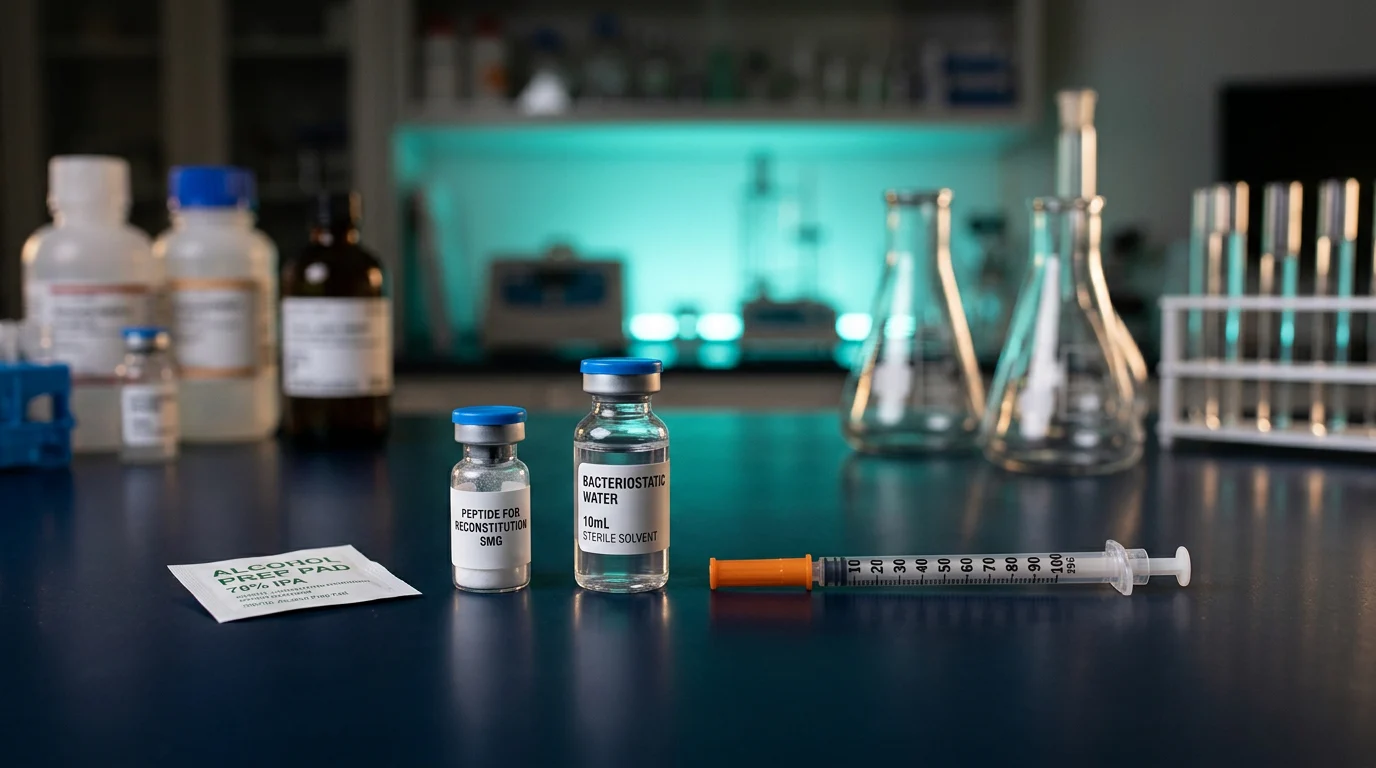
Reconstitution Protocols: Lyophilized peptides are reconstituted with appropriate solvents before use. Bacteriostatic water (0.9% benzyl alcohol) is the most common reconstitution solvent for peptides intended for repeated-use vials, as the bacteriostatic agent prevents microbial growth.
Sterile water or phosphate-buffered saline (PBS) are used when the bacteriostatic agent might interfere with the experimental system. Acidic peptides may require dilute acetic acid (0.1%) for initial dissolution.
The reconstitution volume should produce a concentration appropriate for the intended research protocol — too dilute wastes material, while too concentrated risks aggregation.
Reconstituted Solution Stability: Once reconstituted, peptide solutions have limited stability. Most peptides maintain greater than 90% potency for 2-4 weeks when stored at 2-8°C.
Repeated freeze-thaw cycles accelerate degradation — if long-term storage of reconstituted peptide is necessary, aliquoting into single-use volumes and freezing at -20°C is preferred.
Some peptides (particularly those containing methionine or cysteine) are susceptible to oxidation in solution and should be used within days of reconstitution.
Handling Best Practices: Use sterile technique when handling research peptides. Reconstitution should be performed in a laminar flow hood or clean environment using pre-sterilized supplies. Avoid touching the rubber stopper of vials with ungloved hands.
Record lot numbers, reconstitution dates, and storage conditions for all peptides used in research — this documentation is essential for experimental reproducibility and troubleshooting. For a dedicated FAQ on cold chain, see research peptide storage.
Important Disclaimer
All products and information on this page are intended strictly for laboratory and scientific research use only. Not for human consumption. These statements have not been evaluated by the FDA.
How to Read and Interpret a Certificate of Analysis
The certificate of analysis (COA) is the primary quality documentation for research peptides. A properly prepared COA contains all the information needed to assess whether a peptide meets the requirements for a given research application. Understanding how to read a COA — and recognizing red flags — is a critical skill for peptide researchers.
Essential COA Components: A complete COA should include: (1) peptide identity — sequence, molecular formula, molecular weight, and CAS number where applicable; (2) purity by HPLC — including method details (column type, gradient, detection wavelength) and a chromatogram showing the purity peak; (3) mass spectrometry data — observed molecular weight compared to theoretical, with the mass spectrum included; (4) appearance — physical description of the lyophilized material; (5) solubility — confirmed dissolution in specified solvents; (6) peptide content — net peptide weight as a percentage of total material (accounting for counter-ions, residual moisture, and salts); (7) endotoxin level — LAL assay result for peptides intended for biological research; and (8) batch/lot number and manufacturing date.
Red Flags in COAs: Several features should raise concern about COA reliability: (a) HPLC purity reported without a chromatogram — the chromatogram allows independent assessment of peak shape, resolution, and potential co-eluting impurities; (b) mass spectrometry data showing significant deviation from theoretical molecular weight (greater than 1 Da for peptides under 5000 Da); (c) absence of lot-specific testing — some suppliers reuse a single COA across multiple batches, which does not confirm the quality of the specific material received; (d) endotoxin testing omitted for peptides sold for biological research; (e) inconsistencies between stated purity and chromatogram appearance.
Peptide Content vs. Purity: A commonly misunderstood distinction is between peptide purity (percentage of the peptide component that is the target sequence, typically 95-99%) and peptide content (percentage of the total vial weight that is actual peptide, typically 60-85%).
The remainder of the vial weight includes counter-ions (acetate or TFA salts from HPLC purification), residual moisture, and residual salts.
A vial labeled as containing 5 mg of peptide with 75% peptide content actually contains approximately 3.75 mg of active peptide. This distinction is critical for accurate dosing in research protocols. See the prescribing guide for clinical context.
Sourcing Criteria: Selecting a Research Peptide Supplier
The research peptide market includes manufacturers ranging from ISO-certified laboratories with decades of experience to unverified online sellers with no quality documentation. Selecting a reliable supplier is essential for research integrity and experimental reproducibility. The following criteria should guide supplier selection:
Third-Party Testing: The gold standard for research peptide quality is independent third-party testing. Suppliers who submit samples to independent analytical laboratories for purity verification, identity confirmation, and endotoxin testing demonstrate confidence in their products and commitment to transparency.
Third-party COAs are significantly more reliable than in-house testing, which can be subject to conflicts of interest. Suppliers should provide third-party test results upon request or include them with product shipments.
Manufacturing Transparency: Reputable suppliers disclose their manufacturing processes, synthesis methods (SPPS vs. recombinant), purification techniques (HPLC column specifications, gradient conditions), and quality management systems. ISO 9001 or ISO 17025 certification indicates adherence to international quality management standards. Suppliers who decline to answer reasonable questions about their manufacturing processes should be viewed with caution.
Lot-Specific Documentation: Every batch of research peptides should have unique lot-specific analytical documentation. Generic COAs applied across multiple batches do not confirm the quality of the specific material received. Request lot-specific HPLC chromatograms and mass spectra for the exact batch being purchased. Legitimate suppliers maintain these records as part of their quality management system and provide them routinely.
Customer Support and Technical Expertise: Suppliers should have knowledgeable staff who can answer technical questions about peptide properties, solubility, stability, and reconstitution.
The ability to discuss peptide chemistry and provide application-specific guidance indicates genuine expertise rather than simple resale of sourced materials. PurePep Vital is an education and deals hub—we don’t manufacture or test peptides; we help you compare what retailers publish.
The Future of Research Peptides
The research peptide landscape is evolving rapidly, driven by advances in synthetic chemistry, analytical technology, regulatory developments, and expanding scientific interest in peptide-based approaches across biomedical research fields.
Synthetic Chemistry Advances: Microwave-assisted SPPS, flow chemistry, and automated peptide synthesizers are reducing production time and cost while improving yield and purity for longer peptide sequences.
These advances are making previously difficult-to-synthesize peptides (30+ residues, cyclic structures, post-translationally modified sequences) accessible as research-grade materials. Native chemical ligation and expressed protein ligation techniques enable the assembly of protein-length polypeptides from smaller synthetic fragments.
Modified Peptides: Research into peptide modifications — PEGylation, lipidation, stapling, D-amino acid substitution, and unnatural amino acid incorporation — is expanding the pharmacological properties of research peptides.
These modifications can enhance metabolic stability (extending half-life from minutes to hours or days), improve membrane permeability (enabling oral bioavailability), increase target selectivity, and reduce immunogenicity. Modified peptides represent a growing segment of the research peptide market.
Regulatory Evolution: The regulatory framework for research peptides continues to evolve. FDA scrutiny of the research peptide market has increased, particularly regarding compounds that overlap with compounding pharmacy formulations. Researchers should stay informed about regulatory changes that may affect the availability, classification, or legal status of specific research peptides. The peptide regulation news page provides updates on these developments.
Expanding Research Applications: Peptide research is expanding beyond traditional pharmacological targets into areas including targeted drug delivery (peptide-drug conjugates), diagnostic imaging (radiolabeled peptides), materials science (self-assembling peptide hydrogels), and synthetic biology (designed peptide catalysts).
This diversification is driving demand for novel peptide sequences and specialized modifications that push the capabilities of research peptide suppliers. Browse research listings to compare third-party offers—verify COAs with sellers; PurePep does not certify purity.
Important Disclaimer — For Research Use Only
The information provided is for educational and research purposes only. All peptides discussed or linked on this site are intended strictly for laboratory and scientific research use only (RUO) and are not for human consumption, injection, ingestion, or any therapeutic application. These products have not been evaluated or approved by the FDA or any regulatory body and are not intended to diagnose, treat, cure, or prevent any disease or condition. Reliance on this content is at your own risk. Consult qualified professionals for any health-related decisions. PurePep Vital disclaims all liability for misuse. Products are offered by third-party retailers for research use only.
PurePep Vital is an editorial publisher, vendor comparison resource, and affiliate deal tracker. We do not manufacture, compound, sell, ship, test, prescribe, or handle peptide products. Purchases are completed directly through third-party retailers. PurePep Vital is not a compounding pharmacy or chemical compounding facility as defined under 503A of the Federal Food, Drug, and Cosmetic Act. PurePep Vital is not an outsourcing facility as defined under 503B of the Federal Food, Drug, and Cosmetic Act.
Disclosure: This page contains affiliate links. We may earn from qualifying purchases. See our full disclosure.
Need deals after the research?
Use the deals hub to compare current offers, partner codes, and research news. We recommend retailers that provide quality signals when available.
Explore Our Guides
Related Articles

What Do Peptides Do? Benefits Explained Simply
Peptides are short amino acid chains that act as signaling molecules throughout the body. Here is a clear, science-backed explanation of what peptides do and why they matter.

Are Peptides Legal? A Clear Guide to Peptide Regulations
The legal status of peptides varies by type, jurisdiction, and intended use. Here is a clear breakdown of what is and is not permitted.

Peptide Regulation News 2026: What Researchers Need to Know
Peptide rules sit at the intersection of FDA drug authority, compounding oversight, and state policy. Here is a careful, primary-source-oriented overview for researchers.
Research Peptide Storage: Lyophilized Powder and After Reconstitution
Lyophilized peptide storage, fridge rules, and how long powder lasts—research-focused checklist without dosing advice.
Frequently Asked Questions
Research use only (RUO) means the peptide is manufactured, sold, and intended exclusively for laboratory investigation and scientific study. RUO peptides have not undergone FDA drug approval, are not marketed as drugs or dietary supplements, and are not intended for clinical use. The RUO designation reflects the regulatory pathway, not necessarily quality — many research peptides exceed pharmaceutical purity specifications but are classified as RUO because they have not completed the clinical trial process.