Editorial Review
Author: Dr. Elena Vasquez, Ph.D.(Ph.D. Biochemistry · Lead Science Editor)|Reviewed by: Scientific Compliance Reviewer
Last reviewed: April 2026
Identity and purity as anchors
Most research peptide COAs lead with identity (e.g., mass spectrometry or equivalent) and quantitative purity (often HPLC area percent). These two anchors are the default acceptance criteria in many in-house SOPs. For technique background, the HPLC glossary entry and mass spectrometry entry are helpful quick references.
Additional quality attributes that may be reported include moisture/water, residual solvents, trifluoroacetic acid (TFA) or counter-ion content, and endotoxins if the test method was used. A dedicated discussion of endotoxin and LAL appears in endotoxin and LAL testing on COAs.
Important Disclaimer — For Research Use Only
The information provided is for educational and research purposes only. All peptides discussed or linked on this site are intended strictly for laboratory and scientific research use only (RUO) and are not for human consumption, injection, ingestion, or any therapeutic application. These products have not been evaluated or approved by the FDA or any regulatory body and are not intended to diagnose, treat, cure, or prevent any disease or condition. Reliance on this content is at your own risk. Consult qualified professionals for any health-related decisions. PurePep Vital disclaims all liability for misuse. Products are offered by third-party retailers for research use only.
PurePep Vital is an editorial publisher, vendor comparison resource, and affiliate deal tracker. We do not manufacture, compound, sell, ship, test, prescribe, or handle peptide products. Purchases are completed directly through third-party retailers. PurePep Vital is not a compounding pharmacy or chemical compounding facility as defined under 503A of the Federal Food, Drug, and Cosmetic Act. PurePep Vital is not an outsourcing facility as defined under 503B of the Federal Food, Drug, and Cosmetic Act.
Disclosure: This page contains affiliate links. We may earn from qualifying purchases. See our full disclosure.
Need deals after the research?
Use the deals hub to compare current offers, partner codes, and research news. We recommend retailers that provide quality signals when available.
Explore Our Guides
Related Articles
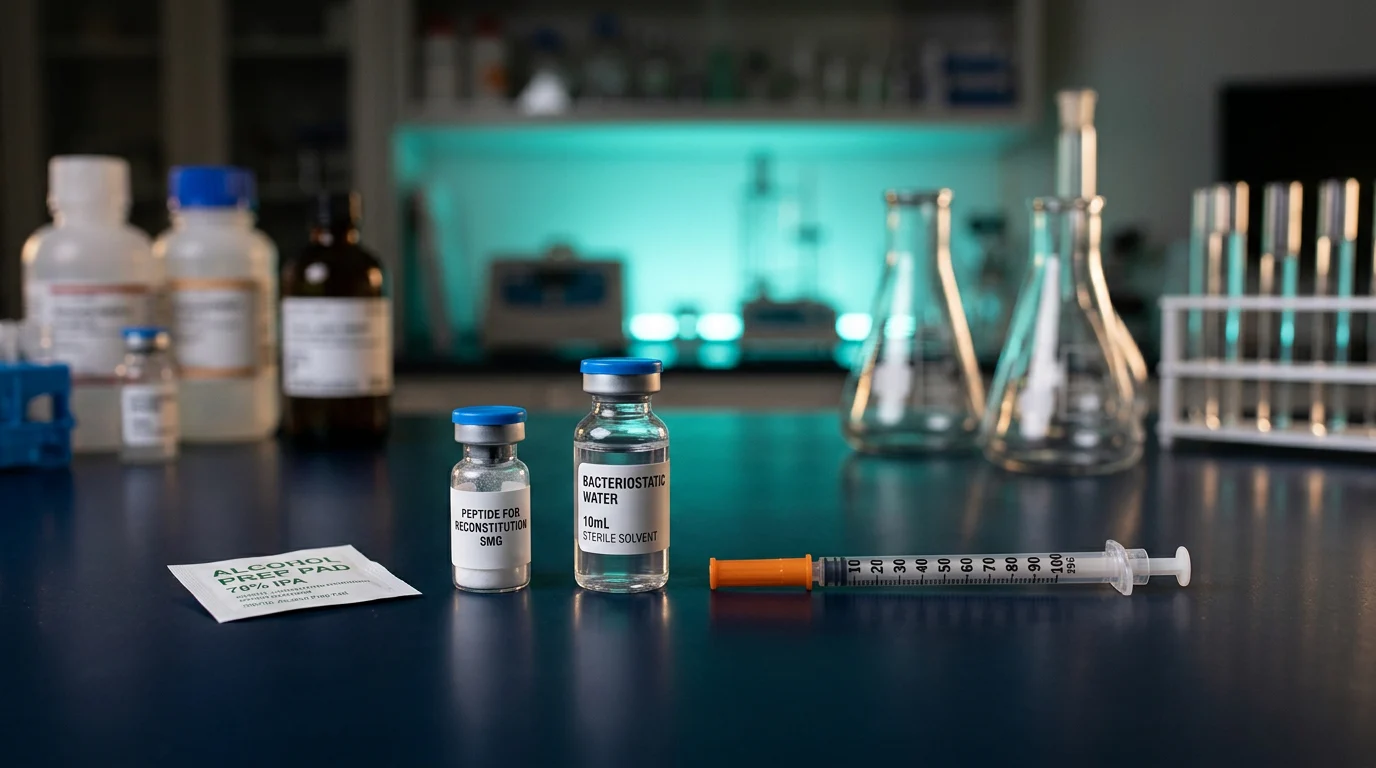
Bacteriostatic Water for Peptides: The Complete Research Guide
Bacteriostatic water is the standard reconstitution solvent for lyophilized peptides in research settings. This guide covers BAC water composition, reconstitution technique, storage protocols, and how it compares to sterile water and acetic acid solutions.

HPLC “% Purity” on a COA: What the Number Does (and Does Not) Mean
Laboratories set acceptance windows for HPLC purity. This guide explains common reporting patterns without replacing your method validation plan.

Peptide Sciences Shut Down: 3 Research Vendors Still Shipping in 2026
Peptide Sciences exited the research market in 2026. Here are the COA-verified vendors PurePep Vital tracks for the same compound list — with side-by-side list-price comparison and editorial scoring.

FDA-Approved Peptides 2025–2026: What Changed for Research Buyers
New peptide drug approvals reshape public discourse; laboratories still distinguish pharmaceutical products from RUO reagents—this article maps the difference.
Frequently Asked Questions
“Sufficient” is protocol-specific. A method might require a minimum purity, orthogonal identity, or absence of a particular impurity. The COA should be checked against the protocol’s pre-defined acceptance window.